Thursday, November 7, 2013

National Conference on Indigenous Peoples' Land Rights Held in Sabah, Malaysia

Credit: Colin Nicholas
From 6-7 November 2013, a national land conference was held in Sabah, Malaysia, to further explore Indigenous peoples' land rights following from the National Land Inquiry report of the Malaysian Human Rights Commission (SUHAKAM). The conference was organised by Jaringan Orang Asal SeMalaysia (JOAS, the national Indigenous peoples' network of Malaysia) and Partners of Community Organisations (PACOS Trust) with the support of the Rainforest Foundation Norway and Rainforest Action Network.

The conference included several expert presentations, panel discussions, and a resolution based on a number of constructive recommendations suggested by participants. Topics addressed included, among others: Indigenous peoples' rights in international law (with particular emphasis on self-determination and free, prior and informed consent), jurisprudence on Indigenous peoples' land rights, issues with conflicting claims in forest reserves, conservation areas and palm oil plantations, and mechanisms for redress and remedy such as tribunals, national commissions, and compensation schemes. For detailed real-time coverage of the conference, please visit JOAS' Facebook page and Twitter feed. Additional coverage is available in Free Malaysia Today.

Wednesday, November 6, 2013

International Workshop on ICCAs in Thika, Kenya

On November 5th 2013, Maya Sikand from Natural Justice attended and presented at an International Workshop on ICCAs in Thika, Kenya. The workshop was hosted by the Institute for Culture and Ecology (ICE) and the Swedish Society for Nature Conservation. Participants included representatives from community organisations from Indonesia, Malaysia, the Philippines, South Africa, Uganda, Ethiopia and Kenya. The workshop provided an excellent opportunity for the different organizations to share lessons from the ICCA-related work they are doing across the world. 

Maya Sikand gave a presentation on International Law and Policy Frameworks and ICCAs. Information about the various international mechanisms that exist was welcomed as just one tool of many to support and protect ICCAs. Different participants were able to connect the international frameworks to projects or developments in their own countries. For example, some had engaged with REDD+ or the Nagoya Protocol. Other participants came from countries that have put in place laws to protect Indigenous Peoples’ rights, and have participated in the work of implementing these laws. This presentation was followed by a discussion led by Adam Hussein Adam on the national legal context for Kenya, taking much from his recent report on the legal context for Sacred Natural sites in Kenya. 

Friday, November 1, 2013

First Peoples release Indigenous Rights Risk Report

First Peoples Worldwide
First Peoples have released their Indigenous Rights Risk Report. The report analyses 52 US-based extractive companies and 370 oil, gas, and mining sites that are situated on or near indigenous peoples' lands. Given findings that 92% of sites posed a medium to high risk to shareholders, the report proposes a new risk assessment tool. The report documents how conflicts or tensions between companies and indigenous communities can cause great losses. For example, one company First Peoples analyzed was Southwestern Energy. Protests by activists at one of their sites was costing them $60,000 a day.

Only 5% of the companies analyzed had an indigenous peoples policy, pointing out a serious gap for communities, companies and shareholders. The report warns that the risks of not having an indigenous peoples policy or respecting their rights are continuing to increase as more and more indigenous peoples rights are incorporated into national and international legal frameworks. At the same time, extractive industries increasingly find sites on indigenous peoples lands. The report suggests that the report can be a risk analysis tool and platform for indigenous peoples and investors to work together as shareholders to pressure companies to both respect indigenous peoples rights and maximise shareholder returns. The report is available for download in English here.

South-South Exchange Mechanism

On Thursday October 31st Maya Sikand of Natural Justice attended a meeting of the South-South Exchange Mechanism at the Global South-South Development (GSSD) Expo at the United Nations Office Nairobi. The UNEP South-South Exchange Mechanism is an online portal of case studies and solutions aimed at facilitating exchange and knowledge sharing on issues of sustainable development. Natural Justice have submitted a case study on Biocultural Community Protocols to the mechanism. Currently the case study is under expert review and should hopefully be included in the portal shortly. 

The main purpose of this meeting was to incorporate feedback from participating organizations into Phase II of the mechanism. Currently there are about 50 organizations globally working on case studies in diverse subject areas related to sustainable development, Academics review the cases, and it is suggested that Training Modules could be a potential next step. From the other organizations present it was suggested that a database to help connect organizations to relevant funders would also be a useful step for Phase II.

Natural Justice Attends Side Event During UN GA on the Role, Protection and Effective Participation of Human Rights Defenders in Development

On 29 October 2013, Eli Makagon attended a side-event held by the International Service for Human Rights at United Nations headquarters in New York. The side-event, held during the UN's ongoing 68th General Assembly meeting, was entitled The Role, Protection and Effective Participation of Human Rights Defenders in Development, and brought together panelists, including Margaret Sekaggya, UN Special Rapporteur on the situation of human rights defenders and Pavel Sulyandziga, Chair of the UN Working Group on the issue of human rights and transnational corporations and other business enterprises, to discuss the issues. The panelists noted that very often, human rights defenders are people from Indigenous and local communities who are facing threats from large scale development. Among other things, Mr. Sulyandziga noted that international financial institutions such as the World Bank Group are an important factor in ensuring that the rights of Indigenous peoples are respected, as many of the major corporations involved in development are attempting to obtain loans from those institutions. Ms. Sekaggya reported that there were some positive developments, such as Australia's mining assessment initiatives and Columbia's national hydrocarbon agency assessment, as well as the Extractive Industries Transparency Initiative (link).

Tuesday, October 29, 2013

Mining, Oil and Gas at MindSpeak Business Club

http://basetitanium.com/education-and-media/photo-library
On Saturday October 26th Maya Sikand from Natural Justice attended a public forum in Nairobi about the Voluntary Principles and the growing mining, oil and gas sectors in Kenya. The meeting was hosted by business analyst Aly-Khan Saatchu's monthly business club, Mindspeak. The panel featured Cliff Otega, a Kenyan mining analyst, His Excellency David Angell, Canadian High Commissioner to Kenya, Evelyn Samba, Deputy Secretary to the Kenya National Commission on Human Rights, and Simon Wall, Corporate Affairs Manager of Base Titanium. The meeting drew an audience of over 200 people.

The challenges for the new and growing mining sector in Kenya and the opportunities for guidelines such as the Voluntary Principles were discussed by each of the panelists. Cliff Otega pointed out to a room full of young people hoping to benefit from this new industry, that the extractives industry doesn't actually provide many employment opportunities as it is so capital and machinery intensive. Kenya should not look to this as the sector that will transform the economy for youth. However, all the panelists agreed that the multiplier effects, including infrastructure and services development will bring benefits to the region.

Thursday, October 24, 2013

Seminar on Human Rights and Environment

The Asia Europe Foundation had its 13th Informal ASEM Seminar on Human Rights from 21 - 23 October 2013 at Copenhagen, Denmark. This year has an interesting theme for discussion on “Human Rights and The Environment”. Around 140 participants including diplomats, members of national human rights institutions, lawyers, journalists and civil society representatives from 49 countries have participated in the three day seminar on human rights and environment. The seminar was inaugurated by the Environment Minister of Denmark. The seminar has four working groups to discuss in detail on the following areas such as

Rights-Based REDD+ Dialogue II: Realizing REDD+ Safeguards


Natural Justice together with the Heinrich Böll Foundation and the Indigenous Peoples of Africa Co-ordinating Committee hosted the Rights-Based REDD+ Dialogue II: Realizing REDD+ Safeguards, on 18-19th October 2013 in Cape Town South Africa. This was the second of such dialogues, the first was held in November 2012. Reducing Emissions from Deforestation and Forest Degradation (REDD+) is a mitigation policy under the United Framework Convention on Climate Change (UNFCCC). The REDD+ safeguards are mechanisms designed to reduce identified risks and prevent undesirable outcomes of REDD+ and some also aim to enhance the positive environmental and social impacts of REDD+. 

REDD+ stakeholders from civil society organisations, Indigenous Peoples, government, United Nations, and REDD+ project developers participated in the dialogues. The dialogues began discussing national REDD+ programmes in Southern and Central Africa, with a country focus on activities in Zambia and the Democratic Republic of Congo. A REDD+ project session scrutinised existing REDD+ projects in Africa and heard a project developers perspective on REDD+. Indigenous Peoples engagement in REDD+ was explored and lessons from global case studies discussed. Strategies and tools to engage in REDD+ including the potential of Biocultural Community Protocols as a tool to enhance free, prior and informed consent were considered. The on-going World Bank Safeguards Review process was highlighted and its relevance to REDD+ examined. Governance issues were discussed with a focus on the role of independent monitoring. The final sessions explored ways to positively influence the REDD+ safeguards at the international level and discussed messages for the Warsaw Climate Change Conference UNFCCC COP19.

Tuesday, October 22, 2013

GPS Training in Odisha


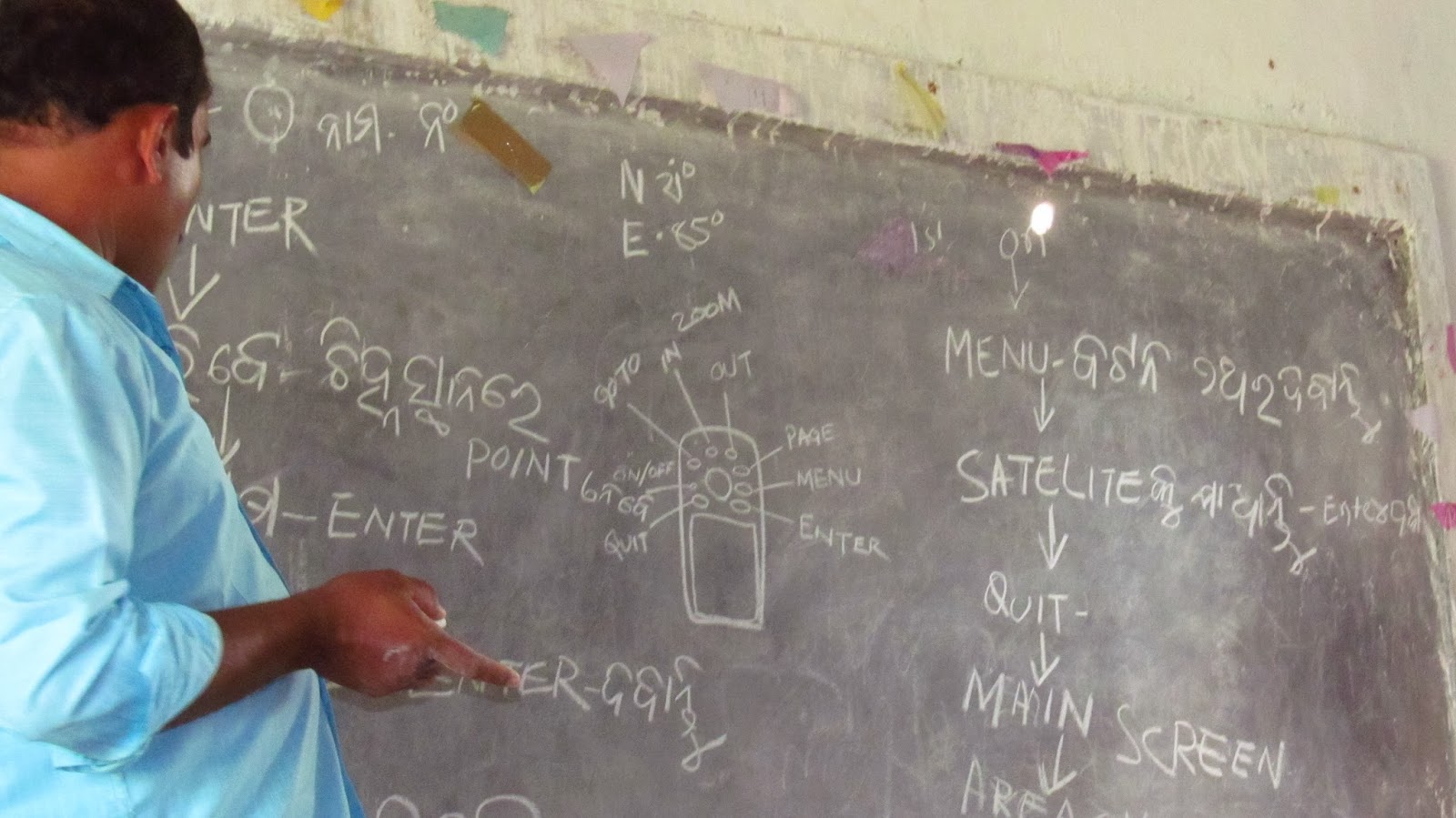
On the 19th and 20th of October 2013, a community-level workshop was held on the use of Global Positioning System (GPS) device to map community resources, to be claimed under the Forest Rights Act of 2006. The training was held in the village of Niapania in Keonjhar district in Odisha, India. Organized by Keonjhar Integrated Rural Development and Training Institute (KIRDTI), an NGO based in Keonjhar, in collaboration with Natural Justice, the workshop saw the participation of around 40 persons from different blocks within Keonjhar as well as from other districts of Orissa. Stella James and Kishore Kumar Patnaik (Fellows, Natural Justice) participated in the workshop and assisted in the coordination of the workshop. 

Mr Adikand Ojha from Bhubaneswar, who acted as the resource person, started with a brief description of the GPS device to the participants, as well as of the advantages of using it. One of the advantages pointed out to the villagers was that while earlier people used to draw maps freehand, or use complicated manual methods of measurement, with a GPS, measurement of land becomes simpler and much more accurate. Moreover, once measurements are taken, the GPS also allows one to see the roads and other waypoints from any part of the world. 

Access and Benefit Sharing (ABS) News Digest

Natural Justice's partner, the ABS Capacity Development Initiative, produces a weekly digest that provides you with information on recent developments and publications related to access and benefit-sharing. The News Digest is divided into several categories which makes it easier to filter the information you really need. These include: Intellectual Property, Sustainable Development, Forests, Agriculture, Traditional Knowledge, New Publications, Upcoming Meetings und IISD Meeting Reports. If you are interested in receiving the news digest please subscribe here: http://eepurl.com/E9aAP.