Tuesday, October 29, 2013

Mining, Oil and Gas at MindSpeak Business Club

http://basetitanium.com/education-and-media/photo-library
On Saturday October 26th Maya Sikand from Natural Justice attended a public forum in Nairobi about the Voluntary Principles and the growing mining, oil and gas sectors in Kenya. The meeting was hosted by business analyst Aly-Khan Saatchu's monthly business club, Mindspeak. The panel featured Cliff Otega, a Kenyan mining analyst, His Excellency David Angell, Canadian High Commissioner to Kenya, Evelyn Samba, Deputy Secretary to the Kenya National Commission on Human Rights, and Simon Wall, Corporate Affairs Manager of Base Titanium. The meeting drew an audience of over 200 people.

The challenges for the new and growing mining sector in Kenya and the opportunities for guidelines such as the Voluntary Principles were discussed by each of the panelists. Cliff Otega pointed out to a room full of young people hoping to benefit from this new industry, that the extractives industry doesn't actually provide many employment opportunities as it is so capital and machinery intensive. Kenya should not look to this as the sector that will transform the economy for youth. However, all the panelists agreed that the multiplier effects, including infrastructure and services development will bring benefits to the region.

Thursday, October 24, 2013

Seminar on Human Rights and Environment

The Asia Europe Foundation had its 13th Informal ASEM Seminar on Human Rights from 21 - 23 October 2013 at Copenhagen, Denmark. This year has an interesting theme for discussion on “Human Rights and The Environment”. Around 140 participants including diplomats, members of national human rights institutions, lawyers, journalists and civil society representatives from 49 countries have participated in the three day seminar on human rights and environment. The seminar was inaugurated by the Environment Minister of Denmark. The seminar has four working groups to discuss in detail on the following areas such as

Rights-Based REDD+ Dialogue II: Realizing REDD+ Safeguards


Natural Justice together with the Heinrich Böll Foundation and the Indigenous Peoples of Africa Co-ordinating Committee hosted the Rights-Based REDD+ Dialogue II: Realizing REDD+ Safeguards, on 18-19th October 2013 in Cape Town South Africa. This was the second of such dialogues, the first was held in November 2012. Reducing Emissions from Deforestation and Forest Degradation (REDD+) is a mitigation policy under the United Framework Convention on Climate Change (UNFCCC). The REDD+ safeguards are mechanisms designed to reduce identified risks and prevent undesirable outcomes of REDD+ and some also aim to enhance the positive environmental and social impacts of REDD+. 

REDD+ stakeholders from civil society organisations, Indigenous Peoples, government, United Nations, and REDD+ project developers participated in the dialogues. The dialogues began discussing national REDD+ programmes in Southern and Central Africa, with a country focus on activities in Zambia and the Democratic Republic of Congo. A REDD+ project session scrutinised existing REDD+ projects in Africa and heard a project developers perspective on REDD+. Indigenous Peoples engagement in REDD+ was explored and lessons from global case studies discussed. Strategies and tools to engage in REDD+ including the potential of Biocultural Community Protocols as a tool to enhance free, prior and informed consent were considered. The on-going World Bank Safeguards Review process was highlighted and its relevance to REDD+ examined. Governance issues were discussed with a focus on the role of independent monitoring. The final sessions explored ways to positively influence the REDD+ safeguards at the international level and discussed messages for the Warsaw Climate Change Conference UNFCCC COP19.

Tuesday, October 22, 2013

GPS Training in Odisha


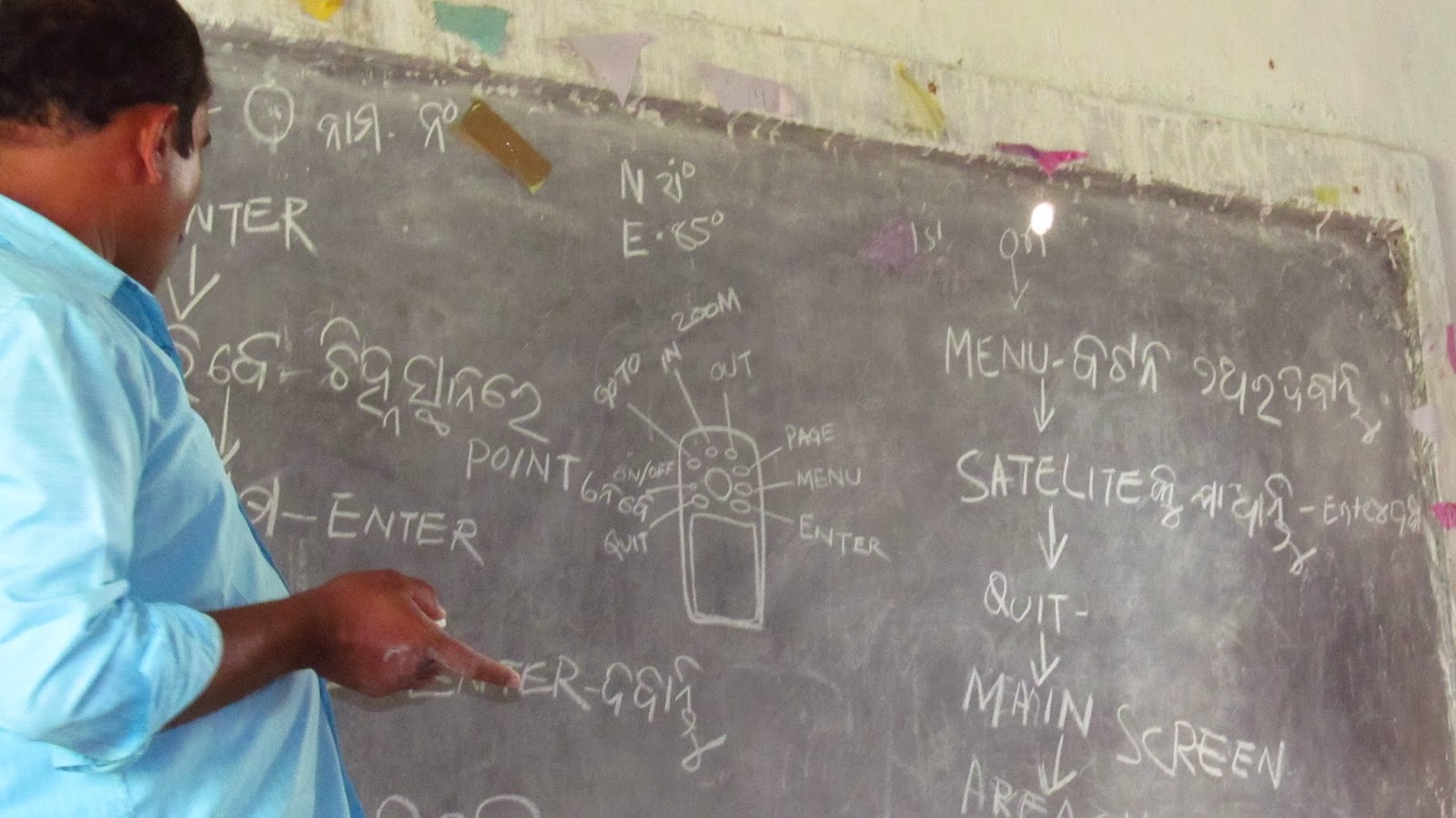
On the 19th and 20th of October 2013, a community-level workshop was held on the use of Global Positioning System (GPS) device to map community resources, to be claimed under the Forest Rights Act of 2006. The training was held in the village of Niapania in Keonjhar district in Odisha, India. Organized by Keonjhar Integrated Rural Development and Training Institute (KIRDTI), an NGO based in Keonjhar, in collaboration with Natural Justice, the workshop saw the participation of around 40 persons from different blocks within Keonjhar as well as from other districts of Orissa. Stella James and Kishore Kumar Patnaik (Fellows, Natural Justice) participated in the workshop and assisted in the coordination of the workshop. 

Mr Adikand Ojha from Bhubaneswar, who acted as the resource person, started with a brief description of the GPS device to the participants, as well as of the advantages of using it. One of the advantages pointed out to the villagers was that while earlier people used to draw maps freehand, or use complicated manual methods of measurement, with a GPS, measurement of land becomes simpler and much more accurate. Moreover, once measurements are taken, the GPS also allows one to see the roads and other waypoints from any part of the world. 

Access and Benefit Sharing (ABS) News Digest

Natural Justice's partner, the ABS Capacity Development Initiative, produces a weekly digest that provides you with information on recent developments and publications related to access and benefit-sharing. The News Digest is divided into several categories which makes it easier to filter the information you really need. These include: Intellectual Property, Sustainable Development, Forests, Agriculture, Traditional Knowledge, New Publications, Upcoming Meetings und IISD Meeting Reports. If you are interested in receiving the news digest please subscribe here: http://eepurl.com/E9aAP.

Second edition of The Living Convention is now available in English and Spanish


The Living Convention provides a range of the most important provisions relating to the linkages between Indigenous peoples and local communities and, among other things, their territories, lands, natural resources, and knowledge systems. It sets them out in an ordered manner, grouping similar provisions under the same heading to enable the reader to quickly assess the extent of international law relating to specific issues. 

The Living Convention is divided into three parts:

Part I sets out the rationale and methodology of the research undertaken to develop the compendium in Part II.

Part II contains a compendium of internationally recognized rights that support the integrity and resilience of Indigenous peoples’ and local communities’ territories and other social-ecological systems. 

Part III sets out a number of key questions concerning, for example, the utility of integrated rights approaches, how international law can be reformed, and how national governments can better uphold their international commitments. It then suggests initial activities that could further deepen the analysis and ways to address the current weaknesses in the development and implementation of international law. 

Thursday, October 17, 2013

Village Meeting on the Forest Rights Act in Odisha

On 15th and 16th October 2013, Stella James (Fellow, Natural Justice) attended a village meeting held at the Bhudabhuin Community Centre in the Sundergarh district of the state of Odisha, India. The meeting revolved around a discussion of the Forest Rights Act 2006 (FRA), a landmark legislation in terms of granting customary rights over resources to adivasis (tribals) and other forest dwellers. The meeting was attended by approximately 60 persons, from different villages, some people travelling many kilometers by foot through thick forests, walking almost an entire day to attend the meeting. 

The meeting was facilitated by Jitendra Sahu, an advocate who has been working in Odisha on successful implementation of FRA in many areas of Odisha. Jitubhai, as he is popularly known, talked about the significant difference between the FRA and previous legislations on forests. In his own words, the crucial distinction is the inclusion of the word ‘right’ between the words ‘forest’ and ‘act’, thus finally marking a departure from the previously parochial understanding of all forest land belonging to the State. He emphasized how adivasis and other forest dwellers are now legally ‘owners’ and ‘right-holders’ of the forests in which they live, and not merely watchmen. Jitubhai also deftly explained some of the main provisions of the Act, without bogging the villagers with too much jargon or technicality, which may have tended to dissuade enthusiastic participation. 

Wednesday, October 16, 2013

Seventeenth SBSTTA Meeting Enters Final Day of Panel Discussions, With Drafting of "Conclusions" to Begin Thursday

As the seventeenth meeting of the Subsidiary Body on Scientific, Technical and Technological Advice (SBSTTA) to the Convention on Biological Diversity (CBD) continues in Montreal, Parties and Observers continue to address the Strategic Goals and Aichi Targets of the Strategic Plan for Biodiversity 2011-2020. The meeting is being conducted with a combination of short speeches by members of panels who are selected based on their expertise in the Strategic Goal being addressed, followed by interventions on the part of Parties and Observers. This format means that some interventions with regard to a specific Strategic Goal are not able to be heard during the plenary and are pushed to the following day. On Thursday, 17 October, the agenda calls for the drafting of "conclusions and recommendations for further work." (Agenda link here.)

Thus far, Natural Justice has been involved in the SBSTTA meeting in several ways. On Monday, Eli Makagon spoke at a side event held by the CBD Alliance regarding a proposed ABS regulation to implement the Nagoya Protocol in the European Union (EU) currently pending before the European Council (for further information, see links on this page). On Tuesday, 15 October, Eli, with the assistance of Nele Marien, coordinator of the CBD Alliance, briefed delegates from the Latin American and Caribbean Group (GRULAC) on the EU's proposed regulation, noting that it severely limits the Nagoya Protocol's scope by limiting its application to genetic resources and associated traditional knowledge accessed after the Nagoya Protocol enters into force for the EU. On Wednesday, 16 October, Natural Justice and the Global Forest Coalition will co-host, along with the ICCA Consortium, a side event on meeting the Aichi Targets. In addition, Natural Justice will be attending several other side events as well as the ongoing plenary sessions. For more immediate updates and further information on the meeting, check out Natural Justice's Twitter feed online at https://twitter.com/naturaljustice.

Tuesday, October 15, 2013

Seventeenth Meeting of the SBSTTA Begins in Montreal, Canada

On October 14, 2013, country delegates, representatives of Indigenous peoples and local communities, and other participants came together in Montreal, Canada for the seventeenth meeting of the Subsidiary Body on Scientific, Technical and Technological Advice (SBSTTA). This meeting, chaired by Mr. Gemedo Dalle Tussie (Ethiopia), is particularly noteworthy because it involves an entirely new meeting format. In the past, the Secretariat of the Convention on Biological Diversity (CBD) prepared draft recommendations that the Parties attending the SBSTTA meeting then considered throughout the meeting's course. This year, however, the CBD Secretariat did not prepare any draft recommendations. Instead, the first three days of the 17th meeting will consist of expert panels addressing issues on the SBSTTA agenda. Summaries of the discussions held during those panels will then be created in order to draft "conclusions, and if appropriate, recommendations." (UNEP/CBD/SBSTTA/17/1/Add.2, para. 6(c)). The effectiveness and ramifications of this new format remain to be seen, and some countries have called into question whether the decision to change the format conforms with the decisions regarding SBSTTA adopted during prior Conferences of the Parties.

On the agenda for this meeting are 2 main items: Item 3 -- Facilitating the implementation of the Strategic Plan for Biodiversity 2011-2020 and the Aichi Biodiversity Targets through scientific and technical means; and Item 4 -- Assessing the effects of the types of measures taken in accordance with the provisions of the Convention. With regard to Item 3, only the first four Strategic Goals of the Strategic Plan for Biodiversity (Goals A-D) will be discussed. Thus, Strategic Goal E, and its crucial Target 18 regarding traditional knowledge of and customary use of biological resources by indigenous peoples and local communities will dot be addressed.

Monday, October 14, 2013

African BCP Initiative Meeting

On Sunday October 13th Natural Justice hosted a meeting of the African Biocultural Community Protocol Initiative’s Kenyan partners in Nairobi. Attendees included representatives from the following organizations: Kivulini Trust, the Ogiek People’s Development Programme, Save Lamu, LIFE Africa Network, the Enderois Welfare Council and the Nairobi People’s Settlement Network. 

The meeting opened with a discussion facilitated by Natural Justice’s Gino Cocchiaro about what a BCP is and how it can help communities to access the law, among other benefits. This was a chance for more experienced partners to share lessons, and new faces to learn more about the process. The rest of the meeting was dedicated to conversations surrounding the presentations of two guest speakers – Rebecca Wangui and Ken Otieno from Reconcile. Rebecca spoke about integrating gender concerns into land issues, giving an overview of the status of women in various Kenyan land laws. Ken’s presentation spurred lively conversations about the status of the Community Lands Bill in Kenya, its significance, and how communities can give input.