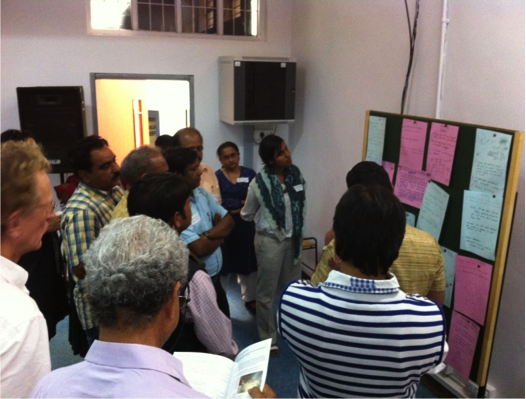
The meeting opened with a discussion facilitated by Natural Justice’s Gino Cocchiaro about what a BCP is and how it can help communities to access the law, among other benefits. This was a chance for more experienced partners to share lessons, and new faces to learn more about the process. The rest of the meeting was dedicated to conversations surrounding the presentations of two guest speakers – Rebecca Wangui and Ken Otieno from Reconcile. Rebecca spoke about integrating gender concerns into land issues, giving an overview of the status of women in various Kenyan land laws. Ken’s presentation spurred lively conversations about the status of the Community Lands Bill in Kenya, its significance, and how communities can give input.
Track the ongoing efforts of this legal NGO as we seek to assist communities to engage with legal frameworks to secure environmental and social justice.
Showing posts with label BCP Initiative. Show all posts
Monday, October 14, 2013
African BCP Initiative Meeting
Saturday, February 23, 2013
Meeting on the Scope of BCPs in Bhubaneswar
Natural Justice and Vasundhara jointly organised a meeting on 22 February 2013 in Bhubaneswar, Odisha District, to discuss the scope of Biocultural Community Protocols (BCPs) in asserting community rights. The meeting was facilitated by Sankar Pani (Natural Justice) and was attended by representatives from various civil society organisations working in Odisha.
Mr Y Giri Rao (Vasundhara) welcomed participants and presented the keynote address. Kabir Bavikatte (Natural Justice) detailed the jurisprudence of BCPs and how they have been used by various communities across the globe in articulating and asserting their stewardship rights. Pratap Mohanty (Vasundhara) spoke on how BCPs can be used as tools in claiming habitat rights for particularly vulnerable tribal communities such as the Juang, Paudibhuyan and Chuktia Bhunjia.
Bhajaman Mahant (Jivan Vikas) presented on the impact of extractive industries on Paudibhuyan Communities and how the community is further alienated by the compensatory afforestation programmes on community land. Sricharan Behera emphasised how BCPs can be used to preserve community knowledge. He also asked how the traditional knowledge related to the production of organic turmeric in Kondhamal can be protected and patented.
Sambandh, a local organization working with traditional healers, presented on the biocultural practices of traditional healers around the sustainable use and conservation of medicinal plants. Priyabrat Satpathy (Action Aid), lawyer and activist Chandranath Dani, Dillip Das (Antoday), Pravat Mishra (RCDC) also participated in the discussions.
Thursday, February 21, 2013
Second Meeting of the ARI-BCP
Natural Justice and the Law, Environment and Design (LED) Lab organised the second meeting of the Asia Regional Initiative on Biocultural Community Protocols (ARI-BCP) at the Srishti School of Art, Design and Technology in Bangalore from 18-20 February, 2013. The meeting was attended by ARI-BCP participants from India, Sri Lanka and Nepal working to support tribal rights, fishing community rights, the rights of communities affected by extractive industries, traditional healers’ rights and farmers’ rights. The meeting was supported by The Christensen Fund and the Ford Foundation.
Participants primarily discussed how BCPs can be used in securing the rights of indigenous communities. They also discussed how domestic legislation can be used in preparing BCPs and how the experiences of BCPs can be shared across larger networks.
Saturday, February 16, 2013
Pastoralist BCP Programme Planning - Nairobi
Natural Justice's Gino Cocchiaro met with Life Africa Trust, Kivulini Trust and the Marsabit Accountability Forum in Nairobi, Kenya on 14 February. The meeting was to plan the two-year programme, supported by the GEF Small Grants Programme, that is being coordinated by the organisations to support the Borana and Samburu pastoralist communities to strengthen community governance systems through the development of community protocols with the aim of enhancing resource management and securing community land. Throughout the project Natural Justice will partner with Kenyan lawyers to build the capacity of the Borana and Samburu to proactively claim their resource and land rights.
Monday, January 28, 2013
Major Publication on Multi-Stakeholder Processes
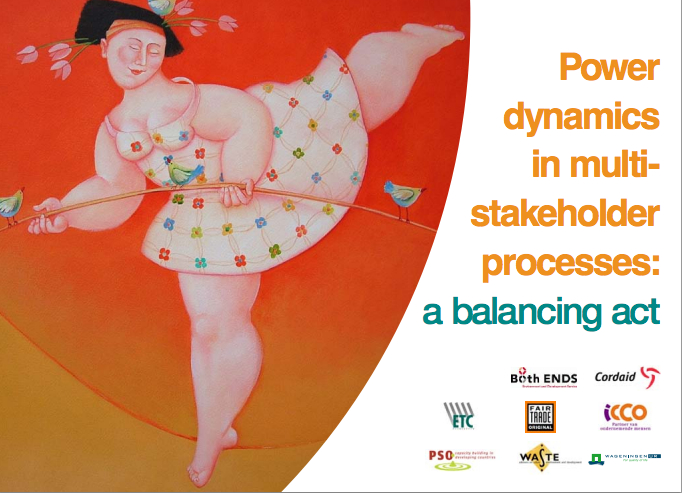
Natural Justice’s co-facilitator of the African BCP Initiative, ETC COMPAS, has released a significant new publication, “Power Dynamics in Multi-Stakeholder Processes: A Balancing Act,” together with six other Dutch development NGOs. The publication, which has been released together with a web portal with relevant resources, summarises lessons learned from 12 multi-stakeholder process case studies in eight nations across Africa, Asia and Central America. The report includes documentation from two biocultural community protocol processes in Ghana and Kenya that Natural Justice supported. The web portal includes country case reports, videos and evaluation reports from the research programme.
From the report, “this publication is a result of the Thematic Learning Programme (TLP) ‘Strategically dealing with power dynamics in multistakeholder processes’ (2011-2012) in which seven Dutch development NGOs investigated how they could address and incorporate a deeper understanding of these power dynamics in their work. This topic is important, because MSPs involve issues in complex contexts: land conflicts, natural resource conflicts or farmers at the bottom of the value chain. MSPs are not always harmonious; the stakes are generally higher for some than for others and the various actors may not necessarily have the same level of representation at the table. This TLP aimed to draw lessons for the different organizations involved and to enable them to deal better with power dynamics in MSPs.”
Monday, November 12, 2012
Kenyan Civil Society Meeting on ICCAs
Natural Justice's Gino Cocchiaro attended a meeting of Kenyan civil society representatives investigating the promotion of Indigenous peoples' and community conserved territories and areas (ICCAs) on 7 November, 2012, in Nairobi, Kenya. During the meeting, which was facilitated by the GEF Small Grants Programme and UNDP, Natural Justice presented on the recently completed Kenyan ICCA legal review, developed by Natural Justice and its partners, and on biocultural community protocols, a legal tool being used by communities in Kenya to secure their ICCAs. Through its BCP Initiative, Natural Justice continues to work closely with Kenyan partners and lawyers to assist communities in the development and use of their BCPs and as they attempt to shape and leverage national law and policy that respect their territories and waters.
Tuesday, September 11, 2012
E-Module on ABS for Communities
Natural Justice has developed a draft e-module that aims to provide an introduction to access and benefit sharing (ABS) and its implications for
Indigenous peoples and local communities. It explores the implications of a range of rights and
responsibilities and how communities may be able to realize them in practice. Natural Justice is developing a number of e-learning modules to support communities developing biocultural community protocols (BCPs) to increase their understanding of key international legal frameworks, concepts and programmes.
Throughout history, Indigenous peoples and local communities
have used traditional knowledge and biological resources to cure
sicknesses, provide nourishment, and fulfill everyday livelihood
needs. More recently, many people have benefitted from the use
of some of this knowledge and biodiversity to develop
pharmaceuticals, cosmetics, crop varieties and livestock breeds,
and other products for personal use. However, the communities that have nurtured the genetic diversity over thousands of years of cultivation and wild use often have
not benefitted from these developments. Frequently, they are not involved in the research and
development process, receive little to no compensation for their knowledge or resources, and have no
access to the final products.
Tuesday, March 27, 2012
African BCP Initiative Meeting - Nairobi
Building on its earlier meeting held in December 2011, African BCP Initiative Kenyan partners met in Nairobi to discuss the experiences of members in developing and implementing BCPs. Member organizations including Natural Justice, ETC Compas, the Center for Indigenous Knowledge and Organizational Development (CIKOD), Mainyoito Pastoralists Integrated Development Organization, Save Lamu, Kivulini, Ogiek Peoples Development Programme and Life Network provided updates on the status of their BCPs. They shared valuable information regarding lessons learned during development and implementation of BCPs, and discussed some of the challenges they faced in the process.
Natural Justice contributed insights on dealing with some of these challenges, and introduced the Biocultural Community Protocols Toolkit, which sets forth tools for community facilitators to support communities in the BCP process. The Toolkit is now available for member comments, with a final version scheduled to be published by the end of 2012. An electronic version is available here. Finally, ETC Compas facilitated a discussion on the relationship between BCPs and multistakeholder partnerships, and addressed the next steps to be taken by the African BCP Initiative. All African partners of the BCP Initiative will be attending a final meeting and planning session in Ghana in June.
Thursday, December 1, 2011
BCP Initiative Meeting in Nairobi
On 30th November, Natural Justice hosted participants and partners of the African BCP Initiative in Nairobi. Members of the Initiative presented on their Biocultural Community Protocol (BCP) development workplans and implementation and members and partners offered feedback on ensuring meaningful BCPs. Throughout the day the key themes that emerged were the importance of good process in preparing BCPs and ideas for increasing the practical uses of BCPs.
Members represented a wide range of communities. The Centre for Indigenous Knowledge and Organizational Development (CIKOD) described the work of two communities in Ghana who are preparing BCPs to protect the Shea Tree and coastal sacred groves. Local organizations working with pastoralist communities in Ilkesumeti and Kivulini, Kenya, shared their aims, which primarily address issues of land security, and the process through which they are engaging with their respective communities to ensure community ownership of the BCPs. Save Lamu presented on the BCP they are developing to enable local communities in Lamu to assert their rights as the Kenyan government prepares to build a major port in Lamu without any meaningful community consultation. MELCA Ethiopia illustrated the BCP being prepared with communities in Sheka Forest to consolidate their land rights and assert their traditional practices of conserving the forest. Representatives from the Laikipia Abandoned Lands Project and the USAID SECURE Project shared successes in community protection of land rights and developments in Kenyan law relevant to communities.
Subscribe to:
Posts (Atom)