Showing posts with label Save Lamu. Show all posts

Wednesday, November 5, 2014

Assisting Communities Assess the Impacts of LAPSSET

The Lamu Port-South Sudan-Ethiopia Transport (LAPSSET) Corridor Project, touted as the “first single gigantic, integrated, transformative and game-changer infrastructure project” the Government of Kenya has embarked upon is said to lead to an increase in the GDP by 3%. Whilst such growth has the potential of being extremely beneficial to the country there has been little discussion of the costs born by its citizens, in particular the communities around the infrastructure and extractive sites. 

In the ecological rich and culturally diverse Lamu archipelago, the site of the mega port, the hunter-gatherer, farming and fishing communities of the area are now witnessing the projects first stage of construction and questioning the benefits and costs of such a project.  In collaboration with its partner, Save Lamu, Natural Justice is working with an international natural resource economist to assist the communities in Lamu determine the potential costs of the port on their health, social and cultural well-being.

On the 11th to 16th October 2014, Members of Natural Justice Kenya and Natural Resource Economics travelled to Lamu to meet with various stakeholders, including Save Lamu, fishermen, business people and County Government representatives. The assessment will result in a report to be used by Save Lamu and members of the community in their discussions with Government to ensure a port that is beneficial to the community and environmentally sound.

Saturday, December 7, 2013

Natural Justice presents on the Kenya Mining Bill 2013

From December 5-6th Natural Justice attended the Annual General Meeting of the Kenya Oil and Gas Working Group (KOGWG). KOGWG is a platform for stakeholder, Civil Society and community engagement on governance, sustainability and development issues in the oil and gas sector in Kenya. 

The first day was a policy review meeting to discuss the Mining Bill 2013 and Petroleum Act. To set up these discussions, presentations on the experiences of other countries in the region were given. Mohammed Athman from Save Lamu presented on his recent experiences in South Africa at the Natural Justice and Namati Land Symposium. Mohammed shared case studies of other communities across Africa who are struggling with similar issues, especially, how to put the law in people's hands. 

In the afternoon, Maya Sikand from Natural Justice gave a presentation on the current Kenyan Mining Bill. The presentation focused on human rights and environmental issues within the Bill, including consent, compensation, benefit-sharing and Environmental Impact Assessments. Notes from the group discussion on the Bill will be submitted as input from the Working Group.

Sunday, November 24, 2013

Coexistence of Culture, Environment & LAPSSET Theatre Performance

Save Lamu information booth at the Cultural Festival
On Saturday 21st November, Save Lamu Voices gave a theatre performance, entitled Coexistence of Culture, Environment & LAPSSET at the 13th Annual Lamu Cultural Festival. The workshops and performance were organized by one of Natural Justice’s partners, Save Lamu

The group Save Lamu Voices is a group of local actors, consisting of youth, women, and members of indigenous communities within the county such as the Bajun, Orma, Aweer and Sanye. The performance was the result of several weeks of participatory theatre workshops aiming to: 
  1. Raise awareness amongst the community on the LAPSSET Project and extractives industries in Lamu; 
  2. Foster dialogue amongst the community on dealing with the challenges of the impending port, including the preservation of the cultural and social identity of marginalized indigenous communities in Lamu. 

Sunday, October 6, 2013

Save Lamu Forum on Human and Environmental Rights Monitoring

On Saturday October 5th Steph Booker and Maya Sikand from Natural Justice presented at a Forum hosted by Save Lamu on Human and Environmental Rights Monitoring in Lamu Town. Participants of the meeting included members of the Lamu community from the Islands and Mainland as well as representatives from communities along the LAPSSET corridor. 

Natural Justice gave a presentation on 'What is Human and Environmental Rights Monitoring?'. Participants then separated into groups according to region, and began documenting changes they have witnessed in their areas. This was an important first step in collecting information, and understanding what sort of questions are asked during human rights monitoring. It is hoped that this forum is the beginning of a wider effort at human rights monitoring training for community organisations along the LAPSSET corridor. Such documentation is an important tool when making a case about human or environmental rights abuses against companies or the government.

Presentations were also made by Sarah Singh from Accountability Counsel and Mohammed Ramadhan from the Kenyan National Commission on Human Rights on national and international grievance mechanisms. Save Lamu have initiated creative ways to bring all the information about changes in the communities to one central place, for example through text messages.

Saturday, August 31, 2013

Significant Victory for Lamu

Kenyan national newspaper, The Daily Nation, reported on a recent legal victory for the community of Lamu, as a result of application by Lamu Resident and the Vice Chairman of Save Lamu, Mr Mohamed Mbwana.  Mr Mbwana sought judicial review to quash directions of the Lamu County Commissioner who, in August 2012, directed that community land in Mvundeni be subdivided and given to private individuals, effectively depriving communities in Mvundeni rights over their traditionally held, occupied and utilised lands.

In his judgement, Justice Angote of the High Court of Kenya, sitting in Malindi, noted that such unalienated government land could only be dealt with as provided for by the Constitution of Kenya – by the National Lands Commission.

This is a significant judgement in favour of the community of Lamu.  You can read the article here.

Land allocation and large-scale population migrations are just some of the flow-on effects of the impending LAPSSET (Lamu Port, South Sudan, Ethiopia Transport corridor) project.  Other consequences of the planned multi-billion dollar port, transport hub, pipeline, oil-refinery, industrial complex and resort city were set out to selected members of the Lamu community in a recent workshop by the Kenyan Physical Planning Office in July.  Member of Save Lamu, Hadija Bwanaadi, set out some of the concerns arising from the “Envisioning Lamu Metropolis” workshop in her article in the East African on 27 July 2013, located here.

In it, Hadija describes the new information the Lamu community received about the sheer size and scale of the LAPSSET project – not previously set out to the community and not even envisaged in the Environment and Social Impact Assessment.  Given revised upward estimates of the project, it is likely to have an even greater impact on the Lamu community – including its environment (relied upon for livelihoods), society and culture.

To learn more of the work of Save Lamu, visit their website or follow them on facebook.
 

Tuesday, April 16, 2013

Save Lamu Calls Upon NEMA to Refuse Issuance of ESIA License for Lamu Port


Save Lamu has called upon the National Management Environmental Authority (NEMA) to refuse the issuance of an Environmental and Social Impact Assessment (ESIA) License for a proposed Lamu Port, which environmentalists say will destroy delicate marine life and choke coral reefs and mangroves. A report by Reuters states that the Kenyan government is spear heading a $25.5 billion project to link landlocked South Sudan and Ethiopia to the Indian Ocean port of Lamu by constructing a major highway, a railway and an oil pipeline, which would take many years. The Kenyan government recently awarded a Chinese firm the first tender for the Lamu Port Project. Save Lamu has criticized the report published by the ESIA, citing lack of proper methodology, poor consultation, and inadequate mitigation plans. Researches acknowledged that the study was carried out in haste, overlooking numerous steps. Among many other concerns, marine surveys were not undertaken due the Ministry of Transport’s financial constraints.

Lamu Island falls within a UNESCO World Heritage Site. Its ecosystem has worldwide recognition as one of the richest along the coastline of East Africa. Its preservation and protection is a point of national significance, as well as an international concern. Other concerns, besides inadequate research, listed in Save Lamu’s petition to NEMA include inadequate assessment of project alternatives and a lack of comprehensive public consultation which is required under the Kenyan Constitution. Save Lamu’s petition to NEMA is available here.

Saturday, February 16, 2013

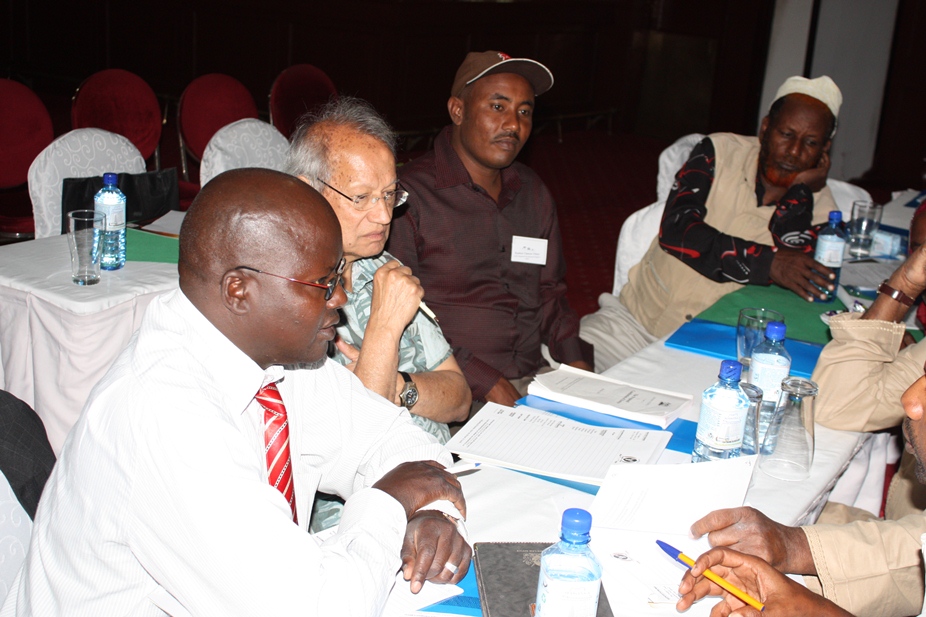
LAPSSET Dialogue Meeting in Nairobi

On 15 February 2013, Gino Cocchiaro (Natural Justice) attended a stakeholder dialogue meeting on the on-going plans and sharing of updates on the implementation of the Lamu Port and Lamu Southern Sudan-Ethiopia Transport Corridor (LAPSSET) in Nairobi, Kenya. The meeting was facilitated by Save Lamu and included over 50 participants from communities affected by LAPSSET, national civil society organisations, multinational organisations and Kenyan government agencies. The meeting resulted in the drafting and adoption of a statement on the aspirations and concerns of communities affected by LAPSSET projects. 

From the statement, “As communities that have long been disenfranchised, and that are in dire need of development, we commend the Kenyan government for its commitment to upgrading and modernising the country’s infrastructure as per the proposed Lamu Port, South-Sudan, Ethiopia Transport (LAPSSET) Corridor outlined in the Government of Kenya’s 'Vision 2030'. We appreciate the need for connecting communities along the northern corridor to facilitate national and international trade. However, we are deeply concerned by the lack of community consultation and transparency in the implementation of the project and hereby wish to express our concerns.” 

Read more about the meeting here. Download the community statement here.