Showing posts with label Kenya. Show all posts

Thursday, July 6, 2017

A New Dawn: The African Court on Human and People’s Rights Historic Judgment on the Indigenous Peoples Rights

Logo Courtesy of African Court on Human and Peoples' Rights   
“The forest is what we call land”
James Sang, Ogiek community member
On 26th May 2017, the African Court on Human and Peoples Rights delivered a historic judgment in favour of the Ogiek, a forest dwelling community.[1] This came after a eight year long legal battle and decades of routinely being subjected to forced eviction, without consultation and compensation, from their ancestral lands by the Government of Kenya (GoK). At the heart of forced eviction was the alleged need to preserve Kenya’s largest closed-canopy forest ecosystem and a water catchment area,[2] spanning about 4000 hectares in five counties,[3] and which has been under threat from illegal settlement and illegal extraction of natural resources.[4]
Following the GoK’s decision in 2009 to evict people living in the Mau forest complex in order to protect the water catchment zone, the Minority Rights Group (MRG), Ogiek Peoples Development Programme (OPDP) and Centre for Minority Rights Development (CEMIRIDE), also the original complainants, on behalf of 30,000 Ogiek members, filled a suit against the Government of Kenya (GoK) at the African Commission of Human and Peoples Rights (“the Commission”) citing the far reaching implications the order had on the political, social and economic well-being of the Ogiek community. Along with it, they requested the commission to issue measures requiring the GoK to halt any land transactions in the Mau Forest Complex and to refrain from any act that would irreparably prejudice the application pending determination.  Subsequent repeated violation of these measures by the GoK led the Commission to transfer the case to the African Court on Human and People’s Rights in 2012 (the current application). The applicant further alleged violation of Article 1,2,4,8, 14, 17(2)(3), 22 and 23 of the Charter and prayed that the court order respondent to halt the eviction, recognize Ogieks historical land, and issue orders as to compensation for the loss suffered through the loss of property, natural resources and freedom to practice religion and culture.
Before addressing the substantive issues of the application, the court at the 28th Ordinary session issued an order of provisional measure on the ground that the respondent, through the Ministry of Land, issued a directive lifting the restriction imposed on all transactions for land measuring five acres or less within the Mau forest complex.[5]
Substantively, the court heard and dismissed objections raised by the GoK on its material and temporal jurisdiction to hear the application as well as the objection on admissibility of the application in as far as the Locus Standi of the of the original complainants, exhaustion of local legal remedies and the nature of the case is concerned. Further, the court addressed the alleged violations of rights provided for in the Charter. Most importantly, the violation of the right to life (Article 4), right to culture and the protection of traditional values (Article 17(2)(3), the right to practice religion (Article 8), the right to property (Article 14) and the right to development (Article 22). It also considered the question of remedy, which in whole included an order to halt the eviction of the Ogiek from East Mau complex, recognizing Ogiek’s historic land and order of payment of compensation.
In the end, the court determined that the Ogiek, having a clear historic attachment to the Mau Forest, are a distinct indigenous people. It also found that the Ogiek had property rights over the land they traditionally occupied and used, even though the colonial and Kenyan authorities had denied them a formal title. The court determined that the practice of religion was inextricably linked to land and any interference with access to land was an interference with this right. In this case, it noted that the Mau Forest is a spiritual home of the Ogiek and that the limitation imposed were unjustifiable. The court further considered the right to culture in a dual dimension: individual nature and the collective nature. It noted that this right was essential to the Ogiek’s identify and that the eviction for the preservation of the natural environment could not constitute a legitimate aim but was rather a measure that violated this right leaving the Ogiek community vulnerable and forcing them to assimilate. Finally, the court found that the GoK had not taken adequate legislative measures to implement the rights violated in the Charter. To this effect, the court ordered the GoK to take appropriate measures within a reasonable period to remedy all violations established. Finally, the court reserved its’ ruling on reparation and instead directed the issue to be dealt with in a different application by the applicant.
This judgment is a huge victory not only for the Ogiek community but also other Indigenous communities in general. Most importantly, by ruling that through a persistent denial of Ogiek land rights, their religious and associated cultural and hunter-gatherer practices were also violated, a strong message was sent to the GoK and other governments on the the need to respect the rights of the indigenous peoples and further, put measures for the realization of these rights. In this case, the court was generous enough to lay down the duty of the GoK to put measures for the implementation of the judgment.  However, the implementation of the orders/ judgment cannot be analyzed without addressing the government’s attitude during this case and in other similar presided cases.  In any event, the GoK has, time and again demonstrated a pattern of empty promises towards implementation of measures and orders made against them.
The Ogiek ought not to lose hope. They must push for the implementation of the court’s decision by lobbying the national government, maintaining a presence in Parliament and using other spaces to remind the GoK of its duty.
[1] ACPHR v GoK
[2] The Mau water catchment feeds into Lakes Victoria, Nakuru, Baringo, Turkana and Natron, and supports the ecosystems and livelihoods of millions of people.
[3] J Sang “Kenya: Ogiek in the Mau Forest” (2001) Forest Peoples Programme
[4] Mau Task Force 17-18. The forest is divided into seven blocs comprising South-West Mau (Tinet), East Mau, Ol’donyo Purro, Transmara, Maasai Mau, Western Mau and Southern Mau.
[5] Summary of fact 2 paragraph 5

Author: Rose Birgen

Saturday, February 11, 2017

Balancing the Scales - Final Report on Community Protocols and Extractives Published

Are community protocols useful in assisting communities to respond to the challenges posed by extractive industries or large scale infrastructure development? For the last three years, four communities in Argentina, India, Kenya, and Zimbabwe, respectively, have been participating in a project that seeks to answer this question (click here for more information). 

The aim of the research project, implemented by Natural Justice with the support of the Heinrich Böll Foundation and in partnership with organisations and communities in Argentina, India, Kenya and Zimbabwe, was to build a better understanding of the ways in which community protocols can be effective in the context of extractive industries and related infrastructure development. The project, which commenced in 2013, has followed and supported community protocol processes in each of these countries. It has supported the sharing of information about protocols among all of the communities, as well as with the public, and resulted in the creation of a Community Protocols Toolbox that sets forth guidance on what facilitators should consider before and while embarking on a protocol process.


The project recently came to an end with the publication of a report, which provides an overview of what has taken place over the last three years in each of the four community protocol processes. The report also captures lessons that can be applied to future protocol processes, should other communities and civil society actors wish to engage in them. The report can be found here.

Friday, January 30, 2015

CALL FOR APPLICATIONS: LAWYER/ LEGAL OFFICER - Natural Justice-Kenya

Natural Justice: lawyers for communities and the environment is expanding its Nairobi, Kenya office and seeking to hire a full-time lawyer to assist in its projects, with a particular focus on supporting communities impacted by infrastructure and extractive industry projects. The successful candidate will be based in Nairobi.

The role of the lawyer will include: providing legal advice to indigenous and/or marginalised communities and their supporting local organisations (including supporting the development and use of community protocols); supporting communities and community partners in strategizing and addressing infrastructure or extractive industry projects, community land and resource laws; conducting research on LAPSSET and other infrastructure projects; preparing legal pleadings, undertaking litigation and/or briefing counsel; working closely with project coordinators in Kenya and South Africa; providing technical advice to County Government and relevant government agencies; attending relevant meetings and workshops within Kenya, Africa and internationally.

The deadline for applications is 2nd March, 2015, 17:00 GMT. Interviews will commence in early March. Please email your application to Gino Cocchiaro (gino(at)naturaljustice(dot)org) with the job title in the subject line. Include a motivation letter that indicates why you feel you are the best candidate for this position, a detailed CV with three references, and maximum three samples of your past work (for example, articles, research reports or court submissions). Please ensure that your application as a whole speaks to the required skills and experience and desirable traits and attributes listed above. For further details, see  Call for applications: Legal Officer, Kenya.

Tuesday, December 23, 2014

Supporting and Strengthening Communities in Marsabit County, Kenya


Aside from being one of the rockiest parts of East Africa, Marsabit County is the second largest county in Kenya, covering at least 15% of the country’s entire territory. Straddling along the boundary between Kenya and her northern neighbor Ethiopia, this county has over 14 different ethnic groups who call it home with sundry livelihoods: including pastoralists, fishermen, hunter-gatherers and small-scale agriculturalists. This large pocket of Kenya also embodies a most diverse landscape, from the ever foggy and freezing highlands formed from historically volcanic mountains near Marsabit Town to a much warmer low lying rugged terrain spanning thousands of square kilometers, and the world’s largest desert lake – the threatened UNESCO World Heritage Site, Lake Turkana.

From the 4th to the 11th of December, Shalom Ndiku and Achieng Orero, of Natural Justice’s Kenya office, partook in the Kalacha Cultural Food and Music Festival 2014 hosted by the Kivulini Trust. In addition to that, they also facilitated a Regional Workshop for the LAPSSET Community Forum (LCF) communities in Marsabit County through the able assistance of Golbo Integrated and the Heinrich Boll Foundation East and Horn of Africa’s Office.

Tuesday, December 2, 2014

Public Hearing on Kenya’s Community Land Bill, 2014

Mr. Odenda Lumumba, from the Kenya Land Alliance
 and the Civil Society Working Group on the Community
 Land Bill, presents his submissions
 on the Bill before the Senate Committee.
Natural Justice’s office in Kenya recently brainstormed on the question of public participation, asking what it entails, its substantive elements, and how to ensure it is effective. The starting point in the law lies in the Constitution of Kenya, which requires Parliament to facilitate public participation and involvement in the legislation process. 

Putting this principle to the test, Natural Justice attended a public hearing on the Community Land Bill held at the Kenyatta International Conference Centre, Nairobi, on last week. This hearing sought to give members of the public an opportunity to propose any amendments or changes to this fundamental Bill. The Senate Committee on the Community Land Bill conducted the hearing and was comprised of five Senators: Christopher Obure (Kisii); George Khaniri (Vihiga); Boy Juma Boy (Kwale); Martha Wangari (Nominated) and Liza Chelule (Nominated).

Friday, November 14, 2014

Communities and Governance of Natural Resources: Natural Justice Works in Turkana

Turkana County, Kenya has been considered amongst the poorest in the country. However, recent oil and water discoveries as well as planned infrastructural developments have brought hope to the citizens of a better life but have also raised a number of critical social, economic and environmental concerns. These were discussed during a Friends of Lake Turkana hosted conference titled 'Towards a Governance Agenda: Harnessing Natural Resources, Communities and Development, which was held in Lodwar, Turkana from the 21-24th of October 2014.

The conference sought to strengthen multi stakeholder participation and engagement in order to ensure local participation in natural resource and infrastructural development. Participants at the meeting included representatives of county and national governments, oil companies, civil society and community representatives. Further information on the conference can be found on the Friends of Lake Turkana website.

Natural Justice is partnering with Friends of Lake Turkana to ensure that legislation and policy positively represent the needs of the citizens of Turkana, in particular its pastoralist communities, so that they are involved in decisions related to their lands, resource and knowledge.

Monday, October 27, 2014

Natural Justice Attends Workshop on Community Land Rights in Kenya

On October 15th and 16th, the Natural Justice Kenya team attended a Community Land Protection workshop in Nairobi, which was facilitated by OXFAM, the Kenya Land Alliance (KLA) and Namati.  Natural Justice is continuing its collaboration with Namati following the successful meeting held in November, 2013 with African community rights activists on community land and natural resource rights.

The primary objective of the two-day workshop was to present Namati’s community land protection process and to discuss the Community Land Bill. The workshop was attended by a number of Kenya civil society organizations and indigenous peoples networks, including Natural Justice’s community partners Kivulini Trust, Friends of Lake Turkana and Save Lamu. In 2013, Natural Justice partnered with Namati to host a meeting.

Friday, October 17, 2014

BCP Training with County Government and Community Members of Isiolo, Kenya

Anab Kassim – Chairlady – Young Mothers Isiolo
On October 8, 2014 Natural Justice partner, Kivulini Trust, held a meeting on the application of bio-cultural community protocols (BCP). The workshop brought together representatives from County Government of Isiolo and Community members developing BCPs.

County Government representatives and community members are increasingly concerned that the Lamu Port – Southern Sudan- Ethiopia Transport (LAPSSET) Corridor will exacerbate the existing economic and cultural marginalization, persistent state of insecurity and lack of secure land tenure.

Tuesday, May 13, 2014

Call for Applications: Research and Policy Officer (Kenya)

Friends of Lake Turkana (FoLT), is a grassroots organization founded in 2009 whose mission is to foster social, economic and environmental justice in the Lake Turkana Basin. FoLT do this through protecting and conserving Lake Turkana, the Lake Turkana Basin and its environment; advocating for the rights of the Turkana Basin communities; increasing the participation of communities in environmental protection policy formulation, sustainable management and wise use of natural resources; and lobbying for increased participation of communities in the development and governance of their resources.


Natural Justice: Lawyers for Communities and the Environment is a young and fast-paced non-profit organisation specialising in human rights and environmental law. We are a pioneering international team of legal practitioners, who conduct comprehensive research on environmental and human rights law, support communities and local organisations, provide technical advice to governments and intergovernmental organisations, and engage in key international processes in pursuit of environmental and social justice. Natural Justice currently works in Africa, Asia and Latin America, with its headquarters in Cape Town and regional offices in Malaysia, India, and USA.

Tuesday, April 1, 2014

Call for Applications: Legal Officer, Kenya

Natural Justice: Lawyers for Communities and the Environment is a young and fast-paced non-profit organisation specialising in human rights and environmental law. We are a pioneering international team of legal practitioners, who conduct comprehensive research on environmental and human rights law, support communities and local organisations, provide technical advice to governments and intergovernmental organisations, and engage in key international processes in pursuit of environmental and social justice.

Natural Justice currently works in Africa, Asia and Latin America, with its headquarters in Cape Town and regional offices in Malaysia, India, and USA.

What are we looking for?
Natural Justice has been working with communities, NGOs and government agencies in Kenya since 2009. Due to increasing demand from our partners, we are seeking a full-time lawyer to lead and co-coordinate our work in Kenya. The successful candidate will be based in Nairobi and will be expected to begin work immediately.

Application process:
Deadline: 18 April 2014, 17:00 GMT

Thursday, December 12, 2013

ICCA Kenya Committee hosts Coast Meeting

From December 9-10th the ICCA Committee in Kenya hosted a multi-stakeholder meeting in Ukunda along the Kenya coast. The objective of the meeting was to initiate discussions on the idea of ICCAs amongst a wide range of community members involved in local conservation initiatives. Participants of the meeting included representatives from conservancies, rangelands, Community Forest Associations (CFAs), Kayas (sacred forests) and Beach Management Units (BMUs) from all along the coastal region. As a member of the ICCA Committee in Kenya, Natural Justice was involved in the planning and coordination of the meeting. 

Tuesday, April 16, 2013

Save Lamu Calls Upon NEMA to Refuse Issuance of ESIA License for Lamu Port


Save Lamu has called upon the National Management Environmental Authority (NEMA) to refuse the issuance of an Environmental and Social Impact Assessment (ESIA) License for a proposed Lamu Port, which environmentalists say will destroy delicate marine life and choke coral reefs and mangroves. A report by Reuters states that the Kenyan government is spear heading a $25.5 billion project to link landlocked South Sudan and Ethiopia to the Indian Ocean port of Lamu by constructing a major highway, a railway and an oil pipeline, which would take many years. The Kenyan government recently awarded a Chinese firm the first tender for the Lamu Port Project. Save Lamu has criticized the report published by the ESIA, citing lack of proper methodology, poor consultation, and inadequate mitigation plans. Researches acknowledged that the study was carried out in haste, overlooking numerous steps. Among many other concerns, marine surveys were not undertaken due the Ministry of Transport’s financial constraints.

Lamu Island falls within a UNESCO World Heritage Site. Its ecosystem has worldwide recognition as one of the richest along the coastline of East Africa. Its preservation and protection is a point of national significance, as well as an international concern. Other concerns, besides inadequate research, listed in Save Lamu’s petition to NEMA include inadequate assessment of project alternatives and a lack of comprehensive public consultation which is required under the Kenyan Constitution. Save Lamu’s petition to NEMA is available here.

Wednesday, March 6, 2013

Katiba Institute's Strategic Litigation Conference in Nairobi

On 1 March 2013, Gino Cocchiaro (Natural Justice) attended a regional forum on Litigating Minority/Vulnerable Groups’ Rights in Nairobi, Kenya. The forum was organized by the Katiba Institute which works to promote the understanding and implementation of the Kenyan Constitution. The workshop provided an opportunity for lawyers involved in public interest law from a number of east African countries, including Kenya, Tanzania, Burundi, Rwanda, to share lessons on strategies and on litigating on behalf of minority or vulnerable groups. Natural Justice was invited to present on the use of biocultural rights as a strategy for securing minority rights and community protocols as a tool to strengthen minority communities' capacity to advocate for themselves.

Saturday, March 2, 2013

Submission to UN Working Group on Human Rights and Transnational Corporations and Other Business Enterprises

On 1 March 2013, Natural Justice with the Centre for Indigenous Knowledge and Organisational Development (CIKOD) made a further submission to the United Nations Working Group on Human Rights and Transnational Corporations and Other Business Enterprises regarding indigenous peoples, business and human rights.

The submission was in response to a concept and discussion note prepared by the Working Group, given its decision to submit a thematic report to the 68th session of the General Assembly that will focus on the situation of indigenous peoples with regard to the prevention of negative impacts of business activities on the rights of indigenous peoples.

Public consultations were held on 14 February 2013 in Geneva and these, and other, submissions addressed the following focus questions:
  1. Focus: What specific issues and challenges should the Working Group take into account in drafting this report? 
  2. Existing guidance and standards: What existing standards and documents should the Working Group take into account in drafting this report? 
  3. Existing practices and initiatives: What existing practices and initiatives should the Working Group take into account in drafting this report?
  4. What focused insight can the Working Group bring to the issue of business impacts on indigenous peoples, given the role and thematic scope of other UN bodies on the rights of indigenous peoples? 
  5. The submissions included case studies on gold mining in Tanchara, Ghana and Lamu, Kenya. 

This, and other submissions, are available here.

Saturday, February 16, 2013

LAPSSET Dialogue Meeting in Nairobi

On 15 February 2013, Gino Cocchiaro (Natural Justice) attended a stakeholder dialogue meeting on the on-going plans and sharing of updates on the implementation of the Lamu Port and Lamu Southern Sudan-Ethiopia Transport Corridor (LAPSSET) in Nairobi, Kenya. The meeting was facilitated by Save Lamu and included over 50 participants from communities affected by LAPSSET, national civil society organisations, multinational organisations and Kenyan government agencies. The meeting resulted in the drafting and adoption of a statement on the aspirations and concerns of communities affected by LAPSSET projects. 

From the statement, “As communities that have long been disenfranchised, and that are in dire need of development, we commend the Kenyan government for its commitment to upgrading and modernising the country’s infrastructure as per the proposed Lamu Port, South-Sudan, Ethiopia Transport (LAPSSET) Corridor outlined in the Government of Kenya’s 'Vision 2030'. We appreciate the need for connecting communities along the northern corridor to facilitate national and international trade. However, we are deeply concerned by the lack of community consultation and transparency in the implementation of the project and hereby wish to express our concerns.” 

Read more about the meeting here. Download the community statement here.

Pastoralist BCP Programme Planning - Nairobi

Natural Justice's Gino Cocchiaro met with Life Africa Trust, Kivulini Trust and the Marsabit Accountability Forum in Nairobi, Kenya on 14 February. The meeting was to plan the two-year programme, supported by the GEF Small Grants Programme, that is being coordinated by the organisations to support the Borana and Samburu pastoralist communities to strengthen community governance systems through the development of community protocols with the aim of enhancing resource management and securing community land. Throughout the project Natural Justice will partner with Kenyan lawyers to build the capacity of the Borana and Samburu to proactively claim their resource and land rights.

Monday, February 11, 2013

Major Court Victory for Tana River Delta Communities

Photo via www.facebook.com/pages/Kenweb
In a significant victory for community land rights, the Kenyan High Court Judge Mumbi Ngugi has ruled that all land use plans for the Tana River Delta must be developed with the full participation of local communities. The Court also ordered that the Tana and Athi Rivers Development Authority must share current short and long term land use plans and that plans will be periodically reviewed. The ruling is a major triumph as tens of thousands of hectares of multi-use floodplain would have been converted for sugar cane production under the current plan and many residents of the Delta were to be removed. 

The case was brought by representatives of farmers, fishermen, pastoralists and conservation groups in the Tana River Delta and sought to halt large-scale commercial developments in the Tana River Delta until a master plan was developed. They were supported by the Kenya Wetlands Biodiversity Research Team with funding from the East African Wildlife Society and Nature Kenya

Read more about the ruling from the East African Wildlife Society’s press release here and the Business Daily here.

Monday, January 28, 2013

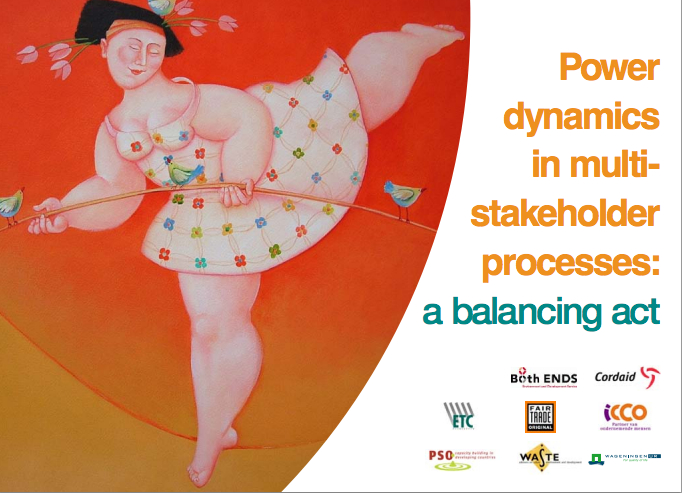
Major Publication on Multi-Stakeholder Processes

Natural Justice’s co-facilitator of the African BCP Initiative, ETC COMPAS, has released a significant new publication, “Power Dynamics in Multi-Stakeholder Processes: A Balancing Act,” together with six other Dutch development NGOs. The publication, which has been released together with a web portal with relevant resources, summarises lessons learned from 12 multi-stakeholder process case studies in eight nations across Africa, Asia and Central America. The report includes documentation from two biocultural community protocol processes in Ghana and Kenya that Natural Justice supported. The web portal includes country case reports, videos and evaluation reports from the research programme. 

From the report, “this publication is a result of the Thematic Learning Programme (TLP) ‘Strategically dealing with power dynamics in multistakeholder processes’ (2011-2012) in which seven Dutch development NGOs investigated how they could address and incorporate a deeper understanding of these power dynamics in their work. This topic is important, because MSPs involve issues in complex contexts: land conflicts, natural resource conflicts or farmers at the bottom of the value chain. MSPs are not always harmonious; the stakes are generally higher for some than for others and the various actors may not necessarily have the same level of representation at the table. This TLP aimed to draw lessons for the different organizations involved and to enable them to deal better with power dynamics in MSPs.” 

The portal can be accessed here. The entire report can be downloaded here.

Wednesday, November 21, 2012

New Report on Sacred Natural Site Protection in Kenya

As Sacred Natural Sites in Kenya and around the world are increasingly threatened, the African Biodiversity Network, the Institute of Culture and Ecology and The Gaia Foundation have released a new report on the protection of Sacred Natural Sites entitled “Recognising Sacred Natural Sites and Territories in Kenya.” The report was commissioned after the enactment of Kenya’s new Constitution in 2010 and authored by Adam Hussein Adam. 

The report is targeted at communities, civil society, lawyers and policy makers. It examines how the Constitution, national and international laws can support the recognition of Sacred Natural Sites and their community governance systems. It makes recommendations for securing greater recognition of Sacred Natural Sites and Territories, and the rights and responsibilities of the communities who protect these sites. It also explores some of the issues which need to be addressed in the pending Community Land Act in Kenya.  

The executive summary can be downloaded here. The full report can be downloaded here.

Monday, November 12, 2012

Presentation to GEF SGP - Kenya

Natural Justice was invited to present at a meeting of the GEF Small Grants Programme (SGP) Kenyan National Steering Committee on 9 November, 2012. The National Steering Committee includes representatives from  governmental, intergovernmental and civil society bodies such as the United Nations Development Programme (UNDP), the Global Environment Facility (GEF), the Kenyan Ministry of Environment, Kenya Wildlife Service, Kenya Forest Service, WWF and Oxfam. It provides support to community based environment projects in the country with the aim of environmental conservation and sustainable livelihood development. Gino Cocchiaro presented on the work of Natural Justice, focusing on biocultural rights and biocultural community protocols as mechanisms to support the wellbeing of communities, conservation and sustainable use of biodiversity.