Friday, June 20, 2014

New Report on Indigenous Peoples’ Rights, Forests and Climate Policies in Guyana

The Forest Peoples Programme (FPP) and the Amerindian Peoples Association (APA) have published a new special report entitled ‘Indigenous Peoples’ Rights, Forests And Climate Policies In Guyana: A Special Report'. The report, edited by Kate Dooley and Tom Griffiths, highlights the vital need for good land tenure governance in the development of sustainable forest and climate initiatives.

One for the key findings, based on detailed fieldwork, is  that insecure land rights and gaps in national legal frameworks as they relate to indigenous peoples’ rights are a major obstacle to the effective and efficient implementation of national land use and climate policies in Guyana.

The authors call  for timely reforms and strengthening of national laws and policies to ensure proper protections for customary land rights and adherence to the core standard of free, prior and informed consent (FPIC).

The report also underlines the pressing need for robust measures by bilateral and multilateral international agencies to ensure compliance with their own safeguard policies in ongoing forest governance, livelihood, infrastructure, energy and climate programmes.

Thursday, June 19, 2014

The Heroes Project: Character Design - Designing the Mantis


During his research period of The Heroes Project designer Abhishek Choudhury came across a lot of folktales which spoke of a trickster deity called /Kaggen in their stories. In folklore of the /Xam people, /Kaggen is seen as the most important deity as a trickster and a creator. /Kaggen is said to be a shape-shifting bushman shaman and often represented as a mantis. The bushman shamans often spoke about physical transformations and shape-shifting in the spirit realm. /Kaggen, the mantis, is said to be the one who created the moon and also the first Eland and other antelopes. In Phase 1, he did an analysis into the character of /Kaggen in an effort to understand the natural and cultural forces that could have moulded this character. More on the character design process.

The urgent need to protect and promote the human right to water in the UN Sustainable Development Goals

In response to the exclusion of the human right to water from the Zero Draft of the Sustainable Development Goals (SDGs) published on June 2nd, recognizing the significance the SGDs will have on the UN development agenda for the next 15 years, and echoing civil society’s consistent demands for a rights-based framework of the SDGs, nearly 300 organisations, including Natural Justice, cosigned a letter titled, “The urgent need to protect and promote the human right to waterand sanitation in the UN Sustainable Development Goals.”

Wednesday, June 18, 2014

BLINC Workshop and Exhibition: 'Asserting Community Rights over the Environment'

Natural Justice India office is hosting a two-day workshop and exhibition called BLINC on the 27th and 28th of June, 2014. BLINC aims to bring together NGOs, academics, activists, designers and individuals or groups interested in the overarching theme of ‘Asserting community rights over the environment’. Some of the objectives guiding this workshop and exhibition are:
  • To bring together interested individuals and groups to discuss their approaches when they encounter challenges on the field while working with communities;
  • To experiment with new methods of conducting such workshops;
  • To work with the participants in arriving at new ways or potential approaches to challenges they experience in the field whilst engaging in such work.

UNGA President Convenes Informal Interactive Dialogue to Discuss WCIP 2014

In preparation for the World Conference on Indigenous Peoples (WCIP) to be held in September 2014, the President of the UN General Assembly (UNGA) is holding an informal interactive dialogue at UN Headquarters on 17-18 June 2014 (link to agenda; link to more information). During the dialogue on 17 June, governments and representatives of Indigenous peoples discussed the WCIP, particularly what the content of the Zero Draft of the WCIP outcome document that will be the subject of the WCIP should contain. Natural Justice's Jael Eli Makagon and Dr. Johanna von Braun will both be attending the dialogue.

Tuesday, June 17, 2014

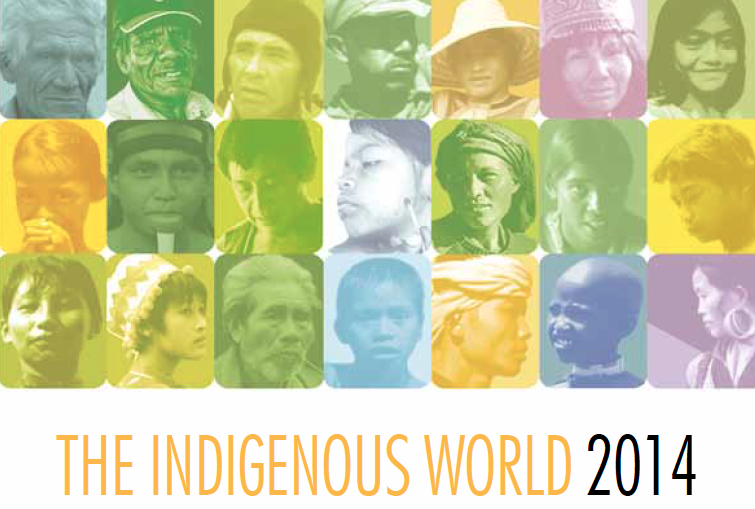
Indigenous World 2014 Published, with Chapter by NJ's Lesle Jansen

Natural Justice’s Lesle Jansen has contributed a chapter on South Africa to the International Working Group on Indigenous Affairs (IWGIA) annual publication, Indigenous Affairs. The 2014 edition contains a comprehensive update on the current situation of indigenous peoples in 73 articles written by indigenous and non-indigenous scholars and activists.


The chapter on South Africa is one  of 58 country reports and 15 articles on international processes, reflecting ongoing worldwide human rights violations, especially with regards to indigenous peoples’ land, territories and resources.

The reports also reflect indigenous peoples’ path towards the World Conference on Indigenous Peoples, their participation in climate change negotiations, engagement with the Post 2015 Development Agenda, and their local struggles for the implementation of their right to development with free, prior and informed consent, among many other issues of importance in 2013.

Friday, June 13, 2014

The Heroes Project: Graphic Narrative


Natural Justice's Heroes Project is an initiative started to revive the mythology and folklore of the Khoi-san as a spiritual and cultural relief to face their present day socio-political struggles. The Heroes Project phase 1 of the project started in July 2013 which led to the creation of a workshop model for teenagers aged between 13-15.

The workshop combined elements of theatre, dance, shadow puppetry and mythology to create a space for sharing personal stories and experiences. The idea for such a space came from the ancient story-telling culture of the Khoi-san, which is almost extinct. The space was intended to be a bridge between the reality of the personal stories to the mythology/ folklore of the Khoi-San. Read more about the Project. 

Monday, June 9, 2014

E-module on Reducing Emissions from Deforestation and Forest Degradation (REDD+) for Communities

Natural Justice has developed learning e-modules on reducing emissions from deforestation and forest degradation (REDD+), a mechanism under the United Nations Framework Convention on Climate Change (UNFCCC) through which developing countries are encouraged to contribute to mitigation actions. Over fifty developing countries are engaged in REDD+ and globally there are hundreds of projects and initiatives. The majority of the Earth’s forests are inhabited by Indigenous peoples and rural communities, many of whom may be affected by REDD+ policies, programmes and projects.

Friday, June 6, 2014

Legal Training for San Youth

cc !Khwa ttu
On 4th of June, Natural Justice held a one day legal training with San youth at !Khwa ttu, the San Education and Cultural Centre. The legal training was held with fifteen San youth from southern Africa and focused on the rights of indigenous peoples, intellectual property rights and environmental law. The legal training course will be held on two further occasions in 2014.

The students taking part in the legal training course are part of an 8-month accredited Nature and Cultural Site Guide Skills Programme run through !Khwa ttu's Training Department. During the course, San youth learn about their roots, culture, history and traditional knowledge.

Natural Justice provides legal support and training to San and Khoi communities in southern Africa through partnership with Heinrich Boell Foundation and the Open Society Initiative for Southern Africa. For more information on the work of Natural Justice with the San and Khoi please refer to our website and the Heroes Project.

Thursday, June 5, 2014

Centre for Applied Legal Studies Launches its Community Engagement Policy

On Thursday, 29 May 2014, the Centre for Applied Legal Studies launched its own Community Engagement Policy. Given the existence of codes of conduct and rules that guide the conduct of lawyers when working with individual clients, this policy was developed to address the particular skills, dynamics and challenges involved in working with urban and rural communities. Taking into consideration the dynamics in engaging with people who are often marginalised, the policy articulates a standard of community engagement, intended to facilitate meaningful representation, partnerships and mitigate power imbalances. A number of guiding principles are devised and elaborated on, drawing on international standards and personal experiences.

Attended by members of legal and non-legal civil society organisations across South Africa, the launch was opportunity for participants to learn about the policy and its development and to learn more of particular case studies and share experiences. With Benchmarks Foundation, Lawyers for Human Rights and Legal Resources Centre, Natural Justice representative Stephanie Booker gave reflections on the policy and case studies based on her own experiences working with communities impacted by extractive industries and infrastructure projects.