Showing posts with label Community Protocols. Show all posts

Thursday, May 26, 2016

Argentinian National Ombudsman Issues Resolution Recognizing Kachi Yupi Community Protocol

-->
Guest blog by Pia Marchegiani, FARN

In a major development for the communities of Salinas Grandes and Laguna de Guayatayoc in Northern Argentina, the National Ombudsman (Defensor del Pueblo de la Nación in Spanish) has issued a national resolution, Resolution No. 25/16 (link to Resolution, in Spanish), that officially acknowledges the community protocol finalized by the communities in December 2015. The protocol is entitled “Kachi Yupi; Tracks in the salt; Consultation and Free Prior Informed Consent (FPIC) procedure for the communities of Salinas Grandes and Laguna de Guayatayoc.”

This is the first time that the Argentinian government has recognized a community protocol in this manner. The National Ombudsman is an independent institution within Congress created by the Argentine Constitution with the dual mandate of protecting human rights and monitoring public administration. Resolutions such as these are issued by the National Ombudsman when rights are not being respected or are threatened to be ignored. Thus, they seek to improve enforcement and contribute to policy making. In conjunction with issuing the Resolution, the Ombudsman’s office has also featured the Kachi Yupi protocol on its website, along with an article about the Resolution (see http://bit.ly/1Ts5Aqg). These actions raise the profile of the Kachi Yupi protocol and send a message to government agencies that it is a document that should be respected and used when interacting with the communities of Salinas Grandes and Laguna de Guayatayoc.

Resolution No. 25/16 urges various national and provincial authorities of Salta and Jujuy, including the ministries of infrastructure, mining and energy, agrobusiness, and environment to respect the FPIC procedure described by the communities in the Kachi Yupi protocol for any administrative or legislative measure that may affect them. The Resolution states that appropriate FPIC procedures should also be respected before the implementation of plans or development programs and before any authorization for the exploration or exploitation of resources in these territories is granted.

The Resolution is an important step because it shows that the national government is paying attention to and calling for respect for a process designed in a participatory manner by the communities themselves, and which is inherently respectful of their own culture and worldview. The Ombudsman’s action arrives at a time in which the communities of Salinas Grandes and Laguna de Guayatayoc are faced with a new challenge to the integrity of their land and resources: they have recently learnt through media articles that mining companies continue to seek exploration permits to exploit lithium on their territories.

The public recognition of Kachi Yupi, which was developed in a consensual manner after two years of hard work, strengthens the communities in their struggle to defend their territories and rights.


Pia Marchegiani is a lawyer with Fundación Ambiente y Recursos Naturales (FARN).

Tuesday, May 3, 2016

International Symposium Held on Project Analyzing Community Protocols in the Context of Extractive Industries


Are community protocols useful in assisting communities to respond to the challenges posed by extractive industries? For the last three years, four communities in Argentina, India, Kenya, and Zimbabwe, respectively, have been participating in a project that seeks to answer this question (click here for more information). On Thursday April 14, a Symposium at the Heinrich Böll Stiftung's  headquarters in Berlin brought community members and supporting organizations that are part of the project together with experts involved in relevant fields to present and discuss experiences as well as lessons-learned from the project so far.

The Symposium provided an opportunity for participants to learn more about the process going on in each country through parallel working groups. During the working groups, each project partner gave a presentation on the process thus far and participants were able to ask questions and share their own thoughts and experiences. The presentations showed that the various protocol processes had helped communities to decide on their priorities, articulate appropriate ways for obtaining free, prior and informed consent, and led to the formation of community groups to deal with specific issues caused by extractive activities. In the afternoon, a "World Café" session addressed several guiding questions relevant to developing community protocols, including how to identify the "community" to ensure meaningful stakeholder engagement, options for benefit sharing arrangements in the context of extractive industries, and how communities can ensure that impact assessments are conducted with their participation.

The Symposium also served as the launch of the Community Protocols Toolbox, a publication developed as part of the project. The Toolbox provides practical guidance for facilitators on what to consider before developing a protocol. It breaks the protocol process down into five main elements (facilitator’s perspective, community background, process, outcome, and legal landscape), with context provided for each element. It also provides tools for actually engaging in the process of developing protocols, including tools for holding meetings, ensuring an inclusive process, and for finding relevant national and international laws. It is currently available in hard copy in English, but we hope to make it available in other languages soon. Over the next few months, work will also continue on a research paper to provide an overview of the different processes and seek to identify good practices for protocol processes in the extractive industries context.

Monday, February 17, 2014

Melangkap Community Protocol


Alice Matthew (Borneo Conservancy) and Harry Jonas (Natural Justice) spent the week of the 10-14 February, 2014, working with community researchers and community leaders in the Melangkap cluster of villages to assist in the further development of their community protocol. The communities have been working for over a year, as part of the Kinabalu Biocultural Law Project which is sponsored by the Sabah Biodiversity Centre and UNDP Small Grants Programme, to assess their local resilience and set out for others their endogenous plans. The draft protocol will soon be workshopped across all five of the Melangkap villages before being finalized and signed by all community members, including the community leaders.

Monday, February 3, 2014

Community Forestry and REDD+ in Latin America

A recent publication “Lessons Learned from Community Forestry in Latin America and their Relevance for REDD+” by the Forest Carbon, Markets and Communities assessed decades of community forestry in the region and the significance for REDD+. Community forestry recognises the rights of communities to establish and enforce rules governing forest use and access and has been particularly successful in the Latin American region.

Some key findings from community forestry for REDD+ included:

Empowerment of Communities: The recognition of the rights and responsibilities of communities to establish and enforce rules regarding forest access and use, which is supported by tenure rights and clear legal frameworks for communities. Suitable approaches to empower communities include free, prior and informed consent (FPIC) and tools such as community protocols which can put communities in the driving seat and create conditions for “doing”.

Governance and Stakeholder Engagement: Self-generated community institutions are generally more effective and should be encouraged. Supportive sectorial polies in areas such as agriculture and macroeconomics are important as are reforms that empower communities. Identifying and applying legal instruments that empower, promoting rights-based approaches and recourse mechanisms are also crucial.

Sunday, January 26, 2014

UNIMAS Researchers to Respect Orang Asli’s Community Protocols

Holly Jonas (Natural Justice) was in Ba’kelalan, Sarawak, for the week of 19 January to participate in a workshop hosted by Universiti Malaysia Sarawak (UNIMAS) on its project “Implementing Telecentre Programme Among Orang Asli in West Malaysia”. This was a follow-up to a UNIMAS workshop from 6-7 January in Kuching, Sarawak, attended by Harry Jonas.

Participants at the workshop in Ba’kelalan included a team of UNIMAS researchers from a range of disciplines and around 40 community members from Indigenous (orang asli) villages in West Malaysia involved in the five-year project. The first day consisted of overviews of the project plans and proposed activities by UNIMAS’s project lead, Dr. Poline Bala (Department of Anthropology and Sociology), and other researchers who will lead activities related to information and communication technology, education, health, agriculture, traditional knowledge, and training.

Sunday, January 19, 2014

Community Protocols Featured in Land Watch Asia Skill-share

The Land Watch Asia campaign of the Asian NGO Coalition (ANGOC) hosted a skill-share and learning session on 17 January at the University of the Philippines-Diliman. It took place immediately following the Asian People’s Tribunal and included participants from a range of ANGOC partners across the region. The session focused on sharing community experiences with threats to their land rights, sharing existing mechanisms for protecting land rights, and drawing out effective strategies for defending communities’ land rights.

Following opening remarks by facilitator Catherine Liamzon (ANGOC), Dr. Sadeka Halim (Information Commission Bangladesh) presented on the Right to Information Act, underscoring the fundamental importance of access to information in securing further procedural and substantive rights. Sam Pedragosa (Philippine Association for Intercultural Development and Southeast Asia regional coordinator for the ICCA Consortium; pictured above) then gave a critical overview of community experiences with free, prior and informed consent in the Philippines, with particular emphasis on how the spirit of this process has been manipulated by project proponents (primarily mining companies) for their own benefit and to the detriment of the Indigenous peoples and communities concerned, despite being enshrined in the 1997 Indigenous Peoples Rights Act.

Friday, October 11, 2013

ICCA Consortium and Natural Justice at WILD 10

From the 8th to the 10th of October the ICCA Consortium representatives and Natural Justice attended the 10th World Wilderness Congress, Wild 10, in Salamanca, Spain. Approximately 1500 people, including indigenous peoples and local communities, conservation organizations, government and business representatives attended the conference during which experiences were shared on conservation measures across the globe. An Indigenous and Community Lands and Seas Forum was also held during which members of the ICCA Consortium spoke of their territories and resources and the challenges faced to protect and conserve them. 

Gino Cocchiaro (Natural Justice) was invited to speak about community protocols and highlight examples as to how such protocols are being used to foster dialogue and agreement between communities and protected area authorities. 

Thursday, July 4, 2013

Participatory Mapping Workshop in Melangkap

From 29 June to 1 July, Holly Shrumm (Natural Justice) joined Borneo Conservancy Initiative for the first of a series of participatory mapping workshops with the villages of Melangkap (Sabah, Malaysia). The workshop involved sketch mapping by each of the five villages, comparisons of certain overlapping areas and common resources, and a basic introduction to taking Global Positioning System (GPS) points with hand-held units.

Subsequent workshops will involve creating 2-D and 3-D maps on the basis of GPS points currently being collected, and as part of an ongoing process to document and develop a community protocol.

Thursday, May 30, 2013

World Indigenous Network Conference 2013

The World Indigenous Network Conference, held in Darwin, Australia, brought together over one thousand indigenous people and local community land and sea managers from the 26th to the 29th of May. The meeting provided an opportunity for indigenous peoples and local communities to share their experiences on community based natural resource management techniques through the hundreds of presentations that took place over the 4-day meeting. The presentations highlighted the growing emergence of community led conservation, which has concurrently demonstrated stronger community identity, culture and livelihoods. Keynote speakers at the event included Professor James Anaya, UN Special Rapporteur on the Rights of Indigenous Peoples, Professor Anil Gupta, founder of the Honey Bee Network and Dr. Taghi Farvar, President, Indigenous Peoples and Community Conserved Territories and Areas (ICCA) Consortium. 

Monday, April 15, 2013

Submission on Indigenous and Local Knowledge to IPBES


On 15 April, Natural Justice made a submission to the Intergovernmental Science-Policy Platform on Biodiversity and Ecosystem Services (IPBES) on an information document entitled 'Consideration of initial elements: recognizing indigenous and local knowledge and building synergies with science'. The submission suggested community protocols as an effective tool in building synergies between traditional knowledge and science and as a framework that ensures that the approaches adopted in different sources of information used for understanding traditional knowledge is in compliance with Indigenous peoples' and communities' customary and ethical protocols. The submission focused on the following broad themes:

  • To allow for the effective inclusion of community protocols in the process of building synergies with science, which includes study, documentation, and approaches and methodologies relevant to indigenous and local knowledge, specifically through the IPBES work programme;
  • To ensure that the principles and protocols considered of relevance to indigenous and local knowledge adopts a holistic approach with the incorporation of relevant principles and protocols emerging from the United Nations Framework Convention on Climate Change (1992), UN Convention to Combat Desertification  (1992), and the FAO International Treaty on Plant Genetic Resources for Food and Agriculture (2001), in addition to those already listed from the Convention on Biological Diversity; and
  • To suggest changes that facilitate adequate representation of Indigenous peoples and local communities and their interests in this process.

The IPBES submission and other submissions made by Natural Justice and partners are available here.

Wednesday, March 6, 2013

Katiba Institute's Strategic Litigation Conference in Nairobi

On 1 March 2013, Gino Cocchiaro (Natural Justice) attended a regional forum on Litigating Minority/Vulnerable Groups’ Rights in Nairobi, Kenya. The forum was organized by the Katiba Institute which works to promote the understanding and implementation of the Kenyan Constitution. The workshop provided an opportunity for lawyers involved in public interest law from a number of east African countries, including Kenya, Tanzania, Burundi, Rwanda, to share lessons on strategies and on litigating on behalf of minority or vulnerable groups. Natural Justice was invited to present on the use of biocultural rights as a strategy for securing minority rights and community protocols as a tool to strengthen minority communities' capacity to advocate for themselves.

Saturday, February 23, 2013

Meeting on the Scope of BCPs in Bhubaneswar

Natural Justice and Vasundhara jointly organised a meeting on 22 February 2013 in Bhubaneswar, Odisha District, to discuss the scope of Biocultural Community Protocols (BCPs) in asserting community rights. The meeting was facilitated by Sankar Pani (Natural Justice) and was attended by representatives from various civil society organisations working in Odisha. 

Mr Y Giri Rao (Vasundhara) welcomed participants and presented the keynote address. Kabir Bavikatte (Natural Justice) detailed the jurisprudence of BCPs and how they have been used by various communities across the globe in articulating and asserting their stewardship rights. Pratap Mohanty (Vasundhara) spoke on how BCPs can be used as tools in claiming habitat rights for particularly vulnerable tribal communities such as the Juang, Paudibhuyan and Chuktia Bhunjia. 

Bhajaman Mahant (Jivan Vikas) presented on the impact of extractive industries on Paudibhuyan Communities and how the community is further alienated by the compensatory afforestation programmes on community land. Sricharan Behera emphasised how BCPs can be used to preserve community knowledge. He also asked how the traditional knowledge related to the production of organic turmeric in Kondhamal can be protected and patented. 

Sambandh, a local organization working with traditional healers, presented on the biocultural practices of traditional healers around the sustainable use and conservation of medicinal plants. Priyabrat Satpathy (Action Aid), lawyer and activist Chandranath Dani, Dillip Das (Antoday), Pravat Mishra (RCDC) also participated in the discussions.

Saturday, February 16, 2013

Pastoralist BCP Programme Planning - Nairobi

Natural Justice's Gino Cocchiaro met with Life Africa Trust, Kivulini Trust and the Marsabit Accountability Forum in Nairobi, Kenya on 14 February. The meeting was to plan the two-year programme, supported by the GEF Small Grants Programme, that is being coordinated by the organisations to support the Borana and Samburu pastoralist communities to strengthen community governance systems through the development of community protocols with the aim of enhancing resource management and securing community land. Throughout the project Natural Justice will partner with Kenyan lawyers to build the capacity of the Borana and Samburu to proactively claim their resource and land rights.

Monday, February 11, 2013

Community Visioning Workshop in Melangkap

Harry Jonas (Natural Justice) worked with Lanash Thanda and Alice Matthew (Borneo Conservancy) from 8-10 February to facilitate a workshop in Melangkap, a cluster of villages in Sabah, Malaysia, to begin to explore the communities' futures. The participants looked ahead to Melangkap in 2030 to think through what might be the positive and negative changes, and to think through how to avoid the negative. The workshop and related meetings with the communities' Ketua Kampungs (leaders) constitute preparatory work ahead of assisting the communities to develop a community protocol and to engage external stakeholders.

Monday, January 28, 2013

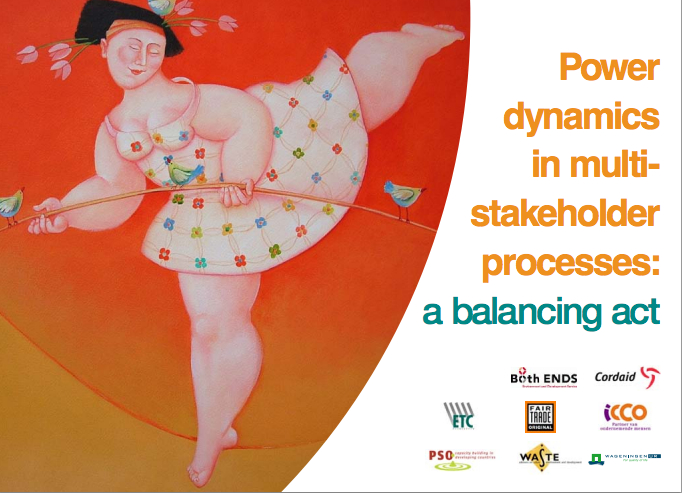
Major Publication on Multi-Stakeholder Processes

Natural Justice’s co-facilitator of the African BCP Initiative, ETC COMPAS, has released a significant new publication, “Power Dynamics in Multi-Stakeholder Processes: A Balancing Act,” together with six other Dutch development NGOs. The publication, which has been released together with a web portal with relevant resources, summarises lessons learned from 12 multi-stakeholder process case studies in eight nations across Africa, Asia and Central America. The report includes documentation from two biocultural community protocol processes in Ghana and Kenya that Natural Justice supported. The web portal includes country case reports, videos and evaluation reports from the research programme. 

From the report, “this publication is a result of the Thematic Learning Programme (TLP) ‘Strategically dealing with power dynamics in multistakeholder processes’ (2011-2012) in which seven Dutch development NGOs investigated how they could address and incorporate a deeper understanding of these power dynamics in their work. This topic is important, because MSPs involve issues in complex contexts: land conflicts, natural resource conflicts or farmers at the bottom of the value chain. MSPs are not always harmonious; the stakes are generally higher for some than for others and the various actors may not necessarily have the same level of representation at the table. This TLP aimed to draw lessons for the different organizations involved and to enable them to deal better with power dynamics in MSPs.” 

The portal can be accessed here. The entire report can be downloaded here.

Tuesday, January 22, 2013

Protocolos comunitarios bioculturales: Kit de herramientas para facilitadores comunitarios

Natural Justice acaba de lanzar la versión en español del "Protocolos comunitarios bioculturales: Kit de herramientas para facilitadores comunitarios". Desarrollado a través de las Iniciativas Regionales sobre Protocolos Comunitarios Bioculturales y traducido del original por cortesía de UICN-Sur, el kit de herramientas está compuesto por cuatro partes: 

  • Parte I: Comprender y utilizar el kit de herramientas 
  • Parte II: Documentar y Desarrollar un protocolo comunitario biocultural 
  • Parte III: Utilizar un protocolo comunitario biocultural 
  • Parte IV: Reflexionar, Informar y Revisar 

El kit de herramientas es destinado principalmente para el uso por Pueblos Indígenas y comunidades locales con el apoyo de organizaciones de confianza, cuando sea apropiado. El kit de herramientas en español está disponible para su descarga en un solo documento o en componentes más pequeños en el sitio web dedicado a los protocolos comunitarios, junto con una serie de recursos adicionales en inglés, tales como módulos de aprendizaje sobre los principales marcos jurídicos, publicaciones y películas.

Un agradecimiento especial a UICN-Sur a través del Proyecto Regional GEF/PNUMA "Fortalecimiento de los Regímenes de Acceso a los Recursos Genéticos y Distribución de Beneficios en América Latina y El Caribe".

Tuesday, January 8, 2013

Paudibhuyan Community of Odisha to Draft BCP

The traditional leaders of the Paudibhuyan community of the Khandadhar region of Sundergarh District in Odisha gathered on 24 December 2012 to prepare a strategy to protect their territory and culture. The meeting was facilitated by Jivan Vikas, a local NGO, and Sankar Pani of Natural Justice. Paudibhuyan is one of the thirteen Primarily Vulnerable Tribal Groups of Odisha, and its population is sharply declining due to various reasons. The community is concentrated in small pockets in the Sundergarh, Keounjhar, Deogaarh and Dhenkanal Districts. At the meeting, the elders of the community shared their rich cultural heritage and traditional knowledge which they have fostered for generations and encouraged their successors to preserve and protect their traditional knowledge. They also raised concerns about various threats to common resources, especially emphasising the impact of mining on local bodies of water. 

The community leaders resolved to draft a biocultural community protocol to record their traditional rights and resources. They demanded recognition of their habitat rights and community rights under Forest Rights Act. They recalled their traditional herbal medicines and recited their traditional folk songs and emphasised the need to preserve them for future generations.

Tuesday, December 11, 2012

Kukula Healers Review 2012 & Plan for 2013

On 6-7 December 2012, Gino Cocchiaro (Natural Justice) attended a meeting of the Kukula Traditional Health Practitioners Association in Thulamahashe, South Africa. The Kukula Traditional Health Practitioners, a group of over 300 traditional health practitioners who developed a biocultural community protocol (BCP) in 2009, were meeting to discuss and evaluate their activities completed in 2012 as well as highlighting their aims for 2013. 

Accomplishments from 2012 included: registering as a NPO in South Africa; drafting a code of ethics for all members of the Kukula Association; creating a traditional knowledge common pool where individual knowledge is shared amongst members and with a local cosmetics company interested in the research and development of the knowledge; and collaborating with  Kruger National Park in its anti-rhino poaching efforts. In 2013, Kukula members plan to update their BCP to reflect legal developments and new priorities, to continue to develop their relationship with the cosmetics company towards and access and benefit sharing agreement, to continue to work for formal recognition as traditional health practitioners, to distribute copies of the code of ethics to all members, and to continue to support anti-poaching efforts.  The Kukula Association are also members of the African BCP Initiative and will continue to to seek the protection and growth of their knowledge, culture and the conservation of biodiversity in their area. 

Download the Kukula BCP here

Monday, December 10, 2012

BIOPAMA Regional Workshop - Eastern & Southern Africa

Via www.iucn.org
From 4-6 December, 2012, Gino Cocchiaro of Natural Justice attended the regional workshop for southern and eastern Africa on the Biodiversity and Protected Areas Management (BIOPAMA) programme in Johannesburg, South Africa. The workshop provided a forum for participants and stakeholders from protected areas, governments and civil society to support the planning of BIOPAMA, which is funded by the European Union and implemented by the International Union for Conservation of Nature, the European Commission Joint Research Centre, and the Access and Benefit Sharing Capacity Development Initiative (ABS Initiative). 

Gino and Suhel al-Janabi (ABS Initiative) presented on ABS case studies, including a discussion on how the Traditional Health Practitioners of Bushbuckridge are using their biocultural community protocol to work towards a potential ABS agreement with a cosmetics company. Other sessions included presentations and discussion on regional reference information systems, refining and addressing capacity development needs, and the drafting of an action plan for the regional implementation of BIOPAMA including the identification of priority activities, identification of key national and regional stakeholders, and agreed processes for collecting data and information. 

Learn more about BIOPAMA at its website here and through its introductory brochure in English, Spanish and French.

Thursday, November 29, 2012

Miskitu BCP Launched in Honduras

Moskitia Asla Takanka (MASTA), a Miskitu community-based organisation, has developed and launched a Biocultural Community Protocol (BCP) with technical assistance from Natural Justice and the International Union for Conservation of Nature’s (IUCN) Regional Office for Mesoamerica. The BCP seeks to assert the right to and guide the process of obtaining free, prior and informed consent (FPIC) for projects in La Moskitia.

The Miskitu community, with a population of around 70 000, live in the tropical rainforest ecosystems of La Moskitia in eastern Honduras. They are facing a series of challenges in their traditional territory, ranging from the destruction of primary forests through agricultural expansion, illegal trade of flora, fauna and drugs, as well as the commercial exploitation of their sub-soil resources. 

To face these and other threats to their natural and cultural environment, MASTA has focused their protocol on defining a mechanism for free, prior and informed consent (FPIC), a vital procedural right that has often been ignored by government and non-governmental development projects. The process of developing the BCP was guided by MASTA, together with representatives from 12 territorial councils and their respective community councils. With this protocol, MASTA is seeking to guarantee that future consultation and consent-seeking processes respect the Miskitu’s own institutions and decision-making procedures.