Showing posts with label Kukula. Show all posts

Friday, July 7, 2017

Kukula Traditional Health Practitioners Association BCP Finalization Workshop, South Africa

Kukula Workshop Participants
On the 28th and 29th June, Natural Justice and K2C facilitated a meeting with the Kukula Traditional Health Practitioners Association at the Timbavati Bush School, Bushbuckridge, South Africa. The overall aims of the meeting were to review the developments of the previous year, to finalize the text of the revised Bio-Cultural Protocol (BCP) and discuss strategies related to leveraging the BCP.
The Kukula traditional health practitioners established the BCP with the intention of regulating their interactions with third parties and protecting their knowledge to enable fair and equitable benefits to their members.
The first day of the meeting focused on a review of the previous year and internal community discussions with Kukula representatives. On the second day of the meeting wider stakeholders were invited to participate in the meeting. Representatives from researchers (Benelex and Dr. Britta Rutert), South African National Parks (SANParks), governmental representatives and legal experts provided an overview of issues that had been identified by the Kukula.
Dr. Louisa Parks (The Benelex Project)
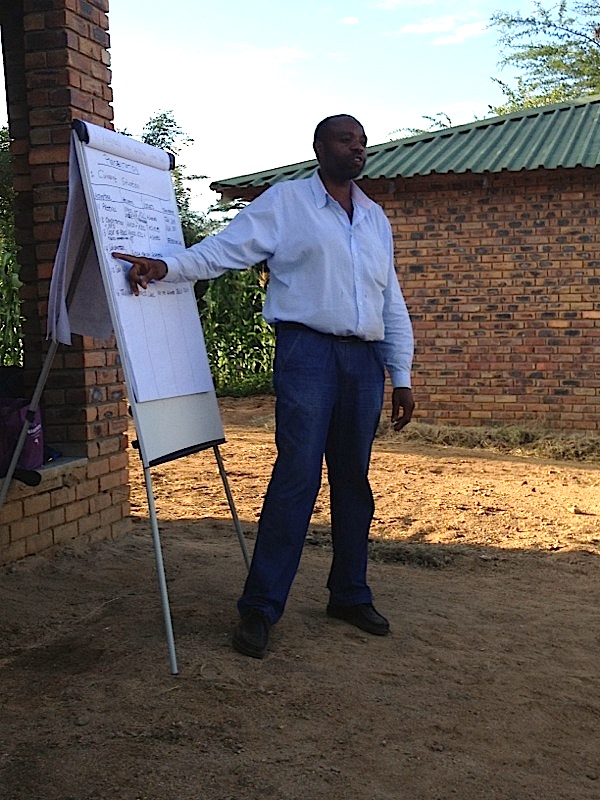
Dr. Louisa Parks (The Benelex Project) shared findings from the first 3 years of the Benelex research project of particular relevance to communities, she highlighted that benefits are more than just limiting damage from a proposed project, they are not compensation, and that they should reflect what a community sees as a benefit – not what others tell them is a good thing. Dr. Britta Rutert (Free University, Berlin) shared the preliminary findings of the ‘Indigenous Entrepreneurs’  research project conducted with the Kukula, she highlighted that entrepreneurship in rural, economically deprived areas with limited infrastructure must be looked as at a “procedural enterprise rather than an economic enterprise”, and organisation, cooperation and negotiation skills were learned and utilized by organisations such as the Kukula in making use of their indigenous knowledge.
Dr. Louise Swemmer (SANParks)
The Kukula have been engaging with South African National Parks (SANParks) on issues related to sustainably harvesting medicinal plants. Discussions focused on opportunities regards integrating Kukula representatives into the roll out of distribution of the medicinal Pepper Bark tree (Warburgia salutaris), which is classified as an endangered on the IUCN Red list. SANParks has been growing hundreds of these tress from seed in their nursery, these trees are in high demand by healers, and SANPaks is spearheading planting of saplings in communal areas, and sustainable harvesting using leaves rather than the bark.
During a legal session, Johan Lorenzen (Richard Spoor Attorneys) provided an update on various laws and policies related to the Kukula, including regulations related to the Traditional Health Practitioners Act as well as the Indigenous Knowledge Systems Bill. This was followed by a presentation by Mr Wiseman Rikhotso (Director, Biodiversity Compliance, Department Environmental Affairs) related to the Threatened or Protected Species (TOPS) Regulations and the compliance awareness drive related to “muthi” (traditional medicine) markets.
The Kukula also discussed the finalization of the update of their bio-cultural protocol (BCP) and how to leverage it moving forwards
.Looking forward the revised BCP text will be finalized, the Kukula together with the Department of Environmental Affairs will host a workshop regards legislation around Threatened and Protected Species (TOPS), and the Kukula will engage with SANParks on supporting the Pepper Bark project in their villages.
Kukula participants

Tuesday, June 28, 2016

Kukula Traditional Health Practitioners Association Bio-Cultural Community Protocols Revision Workshop & Peer-to-Peer Learning Exchange

Community mapping
Natural Justice’s Cath Traynor together with Mina Buthelezi (SANParks BSP/K2C Data Collector & Field Assistant), and Prof. Wayne Twine (Wits University) facilitated a 3-day workshop with the Kukula Traditional Health Practitioners Association to revise their bio-cultural community protocol (BCP). The Kukula’s original BCP was finalized in 2010, and the past 6 years have seen a growth in Kukula membership, a change in their priorities plus the introduction by the South African Government of several new laws and policies which will impact the Kukula. The objectives of the workshop were to (i) finalize the BCP revision process, (ii) focused discussions concerning leveraging the revised BCP, (iii) furthering engagement around medicinal plant issues with protected areas managers, and (iv) peer-to-peer learning exchange with Ndindani Community Nursery in Phalaborwa.

During the first session of the workshop the Kukula agreed on a BCP revision process, this was then followed by a discussion of new laws and policies of relevance to the Kukula, which had been analysed by Johan Lorenzen. These included a reminder of the ‘Indigenous Knowledge Research Ethics Policy’, and an introduction of the possible implications of the ‘Bioprospecting, Access and Benefit Sharing Amendment Regulations, 2015, made in terms of the National Environmental Management Biodiversity Act 10 of 2004, and the Intellectual Property Laws Amendment Act, 2013.

Further sessions on the first day related to engaging with protected areas managers. Prof. Twine (Wits University) facilitated the session which included a mapping exercise to demonstrate the geographic coverage of Kukula members, and Louise Swemmer (Social & Economic Scientist, Savanna & Arid Research, Kruger National Park, SANParks) discussed SANParks Pepper Bark Project and engaging traditional healers [the pepper-bark (Warburgia Salutaris ) is an endangered species, once widespread in South Africa but now limited to monitored populations inside protected areas, it is threatened by harvesters who strip it’s bark in an unsustainable way – the bark is used in traditional medicines]. Tshifhiwa Ramatshimbi from Mariepskop Forest Reserve then provided an update on the application procedures to harvest plants or seeds from the reserve and actions required to ensure adherence to regulations.

Louise Swemmer, SANParks
Tshifhiwa Ramatshimbi,
Mariepskop Forest Reserve

The second day of the workshop focused on procedural issues relating to healing and traditional practitioners and included a practical session exploring medical certificates for sick leave. New developments were then discussed and these included a data monitoring framework introduced by Mina Buthelezi, fundraising initiatives, and Dr. Britta Rutert introduced (via teleconference) a new potential research project with a focus on indigenous entrepreneurs, within which the Kukula will consider participation.

On the final day of the workshop the Kukula traveled up to Ndindani Community Nursery in Phalaborwa, Limpopo Province. There they met key nursery members and also Michele Hofmeyer (Skukuza Indigenous Plant Nursery, SANParks), and Thembi Marshal (K2C) who have been assisting the members to establish the nursery and develop a business plan. Challenges were shared which included developing business plans with short-medium- and long-term strategies, moving from funding to income generation phases, accessing land and markets, and utilizing the land available fully by planting a variety of seasonal produce. The Ndindani Nursery members then escorted the Kukula on a nursery tour highlighting their vegetable produce and also their recently established medicinal plant nursery, which includes pepper-bark saplings. During the tour the Kukula identified some additional indigenous medicinal plant species growing within the nursery grounds.

Medicinal plant identified by the Kukula

Ndindani Community Nursery - vegetable production


During the workshop the Kukula had highlighted the importance of certificates, and thus at the end of the workshop ‘certificates of attendance’ were provided for all participants. Over the next few months the Kukula hope to finalize the text of their revised BCP, and deepen their relationships with SANParks and Mariepskop Forest Reserve.

The Kukula with their 'certificates of attendance'


Wednesday, November 18, 2015

The Kukula Traditional Health Practitioners Association Explore Opportunities with Skukuza Indigenous Plant Nursery, Kruger National Park, South Africa

KTHPA  SANParks staff at Nkuhlu
Enclosure (Photo:  Cath Traynor)
KTHPA discussing medicinal plants with
SANParks staff (Photo: Cath Traynor)


The Kukula Traditional Health Practitioners Association (KTHPA) of Bushbuckridge, South Africa visited Kruger National Park’s Skukuza Indigenous Plant Nursery earlier this year. The Kukula were invited by Michele Hofmeyr, the Manager of the nursery after she attended the Kukula’s Biocultural Community Protocol (BCP) Revision Workshop. The aim of the visit was to explore areas of mutual interest: South African National Parks (SANParks) is developing a list of medicinal plant species of interest to communities in the bufferzone areas of the park, and KTHPA are interested to access propagules of medicinal plant species that only occur within the park.
 
Members of the Kukula spent an afternoon in the nursery, looking at the existing stock of medicinal plant species, learning how the different species are propagated, and discussing which species may be suitable for KTHPA to propagate themselves. The following day, Nursery staff joined the Kukula on a walk in the Nkuhlu Enclosure, a 139 ha fenced area consisting of dense woody vegetation thickets along the Sabie and Crocodile Rivers. The KTHPA members identified species of particular interest, and SANParks staff collected specimens so that scientific names could be ascertained.
 

The nursery kindly donated seedlings and plants to the Kukula, including saplings of the pepper-bark tree (Warburgia salutaris), this is a highly sought-after medicinal plant, which is critically endangered, and one that the nursery is cultivating on a large-scale.


KTHPA at SANParks Skukuza
Indigenous Plant Nursery
(Photo: Cath Traynor)
Michele Hofmeyer, SANParks
Skukuza Indigenous Plants Nursery 
Manager sharing her knowledge regards
successfully germinating different
plant species (Photo: Cath Traynor)
Natural Justice, together with partners K2C and Wits Rural Facility are supporting the Kukula Traditional Health Practitioners to revise their BCP, and to utilize it to constructively engage with external stakeholders such as SANParks. Running throughout South Africa’s legislation on conservation is the balance between conservation on the one hand and sustainable use for the benefit of communities on the other. Through collaborations such as these KTHPA hope to both conserve biodiversity and to advance the health of their communities through their traditional healing practices.


Monday, March 2, 2015

Kukula Traditional Healers BCP Revision workshop

Natural Justice together with partners K2C and Wits Rural Facility (WRF), facilitated a BCP revision workshop for the Kukula Traditional Healers (KTH) of Bushbuckridge, South Africa, on 16 – 18th February 2015. Over twenty KTH members participated including representatives from the Executive and Management Committees. The objectives of the workshop were to revise the KTH Biocultural Community Protocol (BCP) to reflect the Kukula’s priorities and to address key stakeholder needs. 

During the first day of the workshop participants listed their achievements in 2014, and discussed current challenges and priorities for 2015. Mr Johan Lorenzen, from Richard Spoor Inc. Attorney’s, presented on laws, policies and recent legal developments which support the KTH and their aims. Key outside stakeholders participated on day two of the workshop, sessions included ‘governance and leadership’ where representatives from Traditional Authorities and KTH members discussed ways to strengthen their relationship and to improve the management of medicinal plants in communal areas. This was followed by a session exploring possibilities for the sustainable harvesting of medicinal plants in protected areas. 

Tuesday, July 23, 2013

Protocols for Sustainable Harvesting in Protected Areas Workshop


Gino Cocchiaro and Cath Traynor of Natural Justice, and partners Kruger to Canyons Management Committee and Kukula Traditional Health Practitioners Association (KTHPA) attended the Protocols for Sustainable Harvesting in Protected Areas Workshop hosted by Wits University Rural Facility on 13th July 2013. The workshop was the first of a series to start a conversation to achieve a common understanding concerning the possibility for traditional healers to access protected areas in order to harvest medicinal plants. A variety of stakeholders including protected area managers - both national, provincial and private, traditional healers, civil society organisations, and academics attended.

Twenty-seven million (72%) South Africans use traditional medicines and the industry has an annual turnover of more than 3.2 billion Rands. Over 2,000 plant species (10%) of the South African flora is utilised in traditional medicines, and many of these species are declining. Gino Cocchiaro presented on biocultural community protocols (BCP), including the BCP of the Kukula Traditional Health Practitioners Association and Rodney Sibuyi (KTHPA) presented on the history of the Kukula Traditional Health Practitioners Association and discussed some challenges regarding accessing traditional medicinal plant species and their management. South African National Parks highlighted parks-based protocols for non-commercial harvesting, and park objectives concerning plant harvesting which includes promoting sustainable use, alternatives, reducing illegal harvesting and monitoring. Difficulties managing traditional medicinal harvesting was illustrated by the case of Warburgia salitaris (Pepperbark tree), the bark is a popular traditional medicine. Kruger National Park has two of the largest surviving populations of this endangered tree, and recent increases in commercial harvesting pressures have resulted in collection methods changing form the sustainable harvest of small strips of bark to ringbarking trees which results in their death. Issues raised included defining ‘communities’, identifying benefits, who has rights to them and their equitable sharing, costs of access, unity and consensus among beneficiary groups. Important sustainability issues included determining what is ecologically sustainable, adaptative strategies, and addressing situations where demand is greater than supply. The outputs of the workshop will feed into further workshops which will aim to include a greater diversity of stakeholder groups.

Kukula Traditional Healers Practitioners Management Committee Meeting

Gino Cocchiaro and CathTraynor (Natural Justice) attended the Kukula Traditional Health Practitioners Association Management Committee Meeting on 15th July in Bushbuckridge, South Africa. During the meeting with the healers, Biocultural Community Protocol was revisited, and current concerns of the group discussed. Key concerns centred around recognition, access to plants, loss of knowledge, and livelihoods issues. Participants summarised the groups main activities since the formation of the Kukula Traditional Healers group which included discussions with government departments, local private nature reserves, training on prior, informed consent, and development of the traditional knowledge commons pool – a platform to share knowledge among themselves. Participants discussed the future workplan and various ideas and activities to address their priority concerns.

Tuesday, December 11, 2012

Kukula Healers Review 2012 & Plan for 2013

On 6-7 December 2012, Gino Cocchiaro (Natural Justice) attended a meeting of the Kukula Traditional Health Practitioners Association in Thulamahashe, South Africa. The Kukula Traditional Health Practitioners, a group of over 300 traditional health practitioners who developed a biocultural community protocol (BCP) in 2009, were meeting to discuss and evaluate their activities completed in 2012 as well as highlighting their aims for 2013. 

Accomplishments from 2012 included: registering as a NPO in South Africa; drafting a code of ethics for all members of the Kukula Association; creating a traditional knowledge common pool where individual knowledge is shared amongst members and with a local cosmetics company interested in the research and development of the knowledge; and collaborating with  Kruger National Park in its anti-rhino poaching efforts. In 2013, Kukula members plan to update their BCP to reflect legal developments and new priorities, to continue to develop their relationship with the cosmetics company towards and access and benefit sharing agreement, to continue to work for formal recognition as traditional health practitioners, to distribute copies of the code of ethics to all members, and to continue to support anti-poaching efforts.  The Kukula Association are also members of the African BCP Initiative and will continue to to seek the protection and growth of their knowledge, culture and the conservation of biodiversity in their area. 

Download the Kukula BCP here.