Showing posts with label Traditional Knowledge. Show all posts

Friday, July 7, 2017

Kukula Traditional Health Practitioners Association BCP Finalization Workshop, South Africa

Kukula Workshop Participants
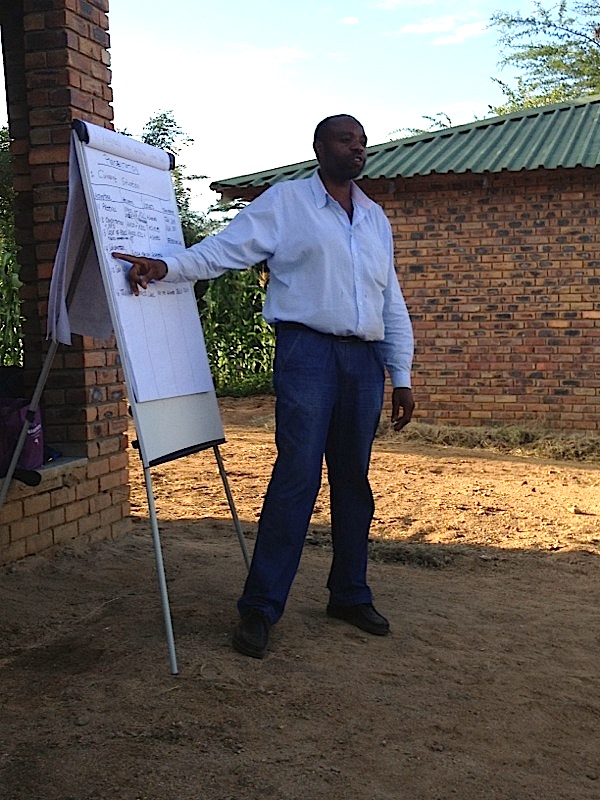
On the 28th and 29th June, Natural Justice and K2C facilitated a meeting with the Kukula Traditional Health Practitioners Association at the Timbavati Bush School, Bushbuckridge, South Africa. The overall aims of the meeting were to review the developments of the previous year, to finalize the text of the revised Bio-Cultural Protocol (BCP) and discuss strategies related to leveraging the BCP.
The Kukula traditional health practitioners established the BCP with the intention of regulating their interactions with third parties and protecting their knowledge to enable fair and equitable benefits to their members.
The first day of the meeting focused on a review of the previous year and internal community discussions with Kukula representatives. On the second day of the meeting wider stakeholders were invited to participate in the meeting. Representatives from researchers (Benelex and Dr. Britta Rutert), South African National Parks (SANParks), governmental representatives and legal experts provided an overview of issues that had been identified by the Kukula.
Dr. Louisa Parks (The Benelex Project)
Dr. Louisa Parks (The Benelex Project) shared findings from the first 3 years of the Benelex research project of particular relevance to communities, she highlighted that benefits are more than just limiting damage from a proposed project, they are not compensation, and that they should reflect what a community sees as a benefit – not what others tell them is a good thing. Dr. Britta Rutert (Free University, Berlin) shared the preliminary findings of the ‘Indigenous Entrepreneurs’  research project conducted with the Kukula, she highlighted that entrepreneurship in rural, economically deprived areas with limited infrastructure must be looked as at a “procedural enterprise rather than an economic enterprise”, and organisation, cooperation and negotiation skills were learned and utilized by organisations such as the Kukula in making use of their indigenous knowledge.
Dr. Louise Swemmer (SANParks)
The Kukula have been engaging with South African National Parks (SANParks) on issues related to sustainably harvesting medicinal plants. Discussions focused on opportunities regards integrating Kukula representatives into the roll out of distribution of the medicinal Pepper Bark tree (Warburgia salutaris), which is classified as an endangered on the IUCN Red list. SANParks has been growing hundreds of these tress from seed in their nursery, these trees are in high demand by healers, and SANPaks is spearheading planting of saplings in communal areas, and sustainable harvesting using leaves rather than the bark.
During a legal session, Johan Lorenzen (Richard Spoor Attorneys) provided an update on various laws and policies related to the Kukula, including regulations related to the Traditional Health Practitioners Act as well as the Indigenous Knowledge Systems Bill. This was followed by a presentation by Mr Wiseman Rikhotso (Director, Biodiversity Compliance, Department Environmental Affairs) related to the Threatened or Protected Species (TOPS) Regulations and the compliance awareness drive related to “muthi” (traditional medicine) markets.
The Kukula also discussed the finalization of the update of their bio-cultural protocol (BCP) and how to leverage it moving forwards
.Looking forward the revised BCP text will be finalized, the Kukula together with the Department of Environmental Affairs will host a workshop regards legislation around Threatened and Protected Species (TOPS), and the Kukula will engage with SANParks on supporting the Pepper Bark project in their villages.
Kukula participants

Wednesday, September 7, 2016

Natural Justice Hosted an Access and Benefit-Sharing Preparation Meeting with Khoi and San Communities Concerning Rooibos

Natural Justice’s Cape Town office hosted preparatory meetings with stakeholders to the Rooibos access and benefit-sharing agreement discussions. The stakeholders present included representatives from the Rooibos farming communities of Wupperthal and Niewoudtsville, the National Khoi-San Council and the San Council of South Africa.

The purpose of the meetings was to (i) Conduct Access and Benefit Sharing training, (ii) Engage in legal consultation with the stakeholders respective lawyers on the negotiations and (iii) to prepare the stakeholders for the broader access and benefit-sharing meeting with the Department of Environmental Affairs and the Rooibos Industry, scheduled for the afternoon of the 31st of August.  The opportunity was also used to discuss with the communities the development of a Biocultural Community Protocol on Rooibos.

The meetings commenced the morning of the 30th of August and closed the afternoon of the 31st of August. During the final session the stakeholders took the time to reflect and wrap up the discussions from the previous day, and they watched a short video introducing the concept of biocultural community protocols along with WIPO’s (World Intellectual Property Organization) resources around traditional knowledge.

The communities then met with the Rooibos Industry during the afternoon. This meeting was hosted and facilitated by the Department of Environmental Affairs at their Cape Town offices.

Monday, December 14, 2015

Rooibos Traditional Knowledge holders meet with Industry

Rooibos industry
Mr. Cecil Le Fleur, Chairman, National KhoiSan Council
The San and Khoi are the rightful knowledge holders regards traditional knowledge related to the rooibos plant, and they are currently negotiating with the rooibos industry in terms of the South African Access and Benefit Sharing legislation. They are legally supported by Lesle Jansen from Natural Justice and Roger Chennells from Albertyn Chennells Inc.   A basic industry-wide agreement is being sought, based purely upon traditional knowledge in the light of the South African legislation, which will simplify the access and benefit sharing and permitting requirements for the rooibos industry. The traditional rooibos farming communities will be the primary beneficiaries under any agreement reached.  The agreement will have significant benefits not only for the Khoi and San traditional knowledge holders, but also for the rooibos industry.  These stakeholders met on 2nd December 2015 in Clanwilliam to further develop these negotiations.

Harvested rooibos, South Africa

Traditional rooibos farming communities from Wupperthal and surrounding areas, South Africa


Monday, March 2, 2015

Kukula Traditional Healers BCP Revision workshop

Natural Justice together with partners K2C and Wits Rural Facility (WRF), facilitated a BCP revision workshop for the Kukula Traditional Healers (KTH) of Bushbuckridge, South Africa, on 16 – 18th February 2015. Over twenty KTH members participated including representatives from the Executive and Management Committees. The objectives of the workshop were to revise the KTH Biocultural Community Protocol (BCP) to reflect the Kukula’s priorities and to address key stakeholder needs. 

During the first day of the workshop participants listed their achievements in 2014, and discussed current challenges and priorities for 2015. Mr Johan Lorenzen, from Richard Spoor Inc. Attorney’s, presented on laws, policies and recent legal developments which support the KTH and their aims. Key outside stakeholders participated on day two of the workshop, sessions included ‘governance and leadership’ where representatives from Traditional Authorities and KTH members discussed ways to strengthen their relationship and to improve the management of medicinal plants in communal areas. This was followed by a session exploring possibilities for the sustainable harvesting of medicinal plants in protected areas. 

Friday, April 4, 2014

The Souls of Coloured Folk: Regaining Sense of Self through Traditional Customs and Rituals

By Lesle Jansen and Kabir Bavikatte
(This article appeared in the Cape Argus Newspaper, 4 April, 2014.)

It is a peculiar sense of always looking at one’s self through the eyes of others, of measuring one’s soul by the tape of a world that looks on in amused contempt and pity – W.E.B Du Bois, The Souls of Black Folk

Article appearing in the Cape Argus, 4 April 2014
I am told that anthropologists have diagnosed a condition amongst some indigenous peoples as ‘loss of soul.’ Apparently, this means the breakdown of a connection a people have to their traditions and their inner lives. They have forgotten the language and prayers their fathers used to speak to the gods, land and animals. They don’t hear their ancestors and their ancestors are deaf to them. In their lives, they are invisible to themselves, they are nameless, uninitiated and among the living dead. They lack a story that is their own. Instead they drift, trying on the masks and customs of other peoples. Sometimes abhorring vacuum, they accept identities thrust on them. And since none of them fit, they wander carrying a nameless ache they can’t put their finger on.

Saturday, September 14, 2013

Natural Justice and the Berne Declaration Submit New Letter to EU MEPs Regarding the Implementation of the Nagoya Protocol as the European Parliament considers its Implementation within the Union

On 6 September 13, Natural Justice and the Berne Declaration sent an letter to the Members of the European Parliament regarding the implementation of the Nagoya Protocol on Access to Genetic Resources and the Fair and Equitable Sharing of Benefits Arising from their Utilization (Nagoya Protocol) in the European Union.

The original Draft Regulation on Access to Genetic Resources and the Fair and Equitable Sharing of Benefits Arising from their Utilization in the Union presented by the European Commission (EC) in October 2012 (Draft ABS Regulation) included a number of short comings, including the fact that user obligations were only going to be triggered by the physical access of genetic resources in the provider country post ratification of the Nagoya Protocol. When the Draft was considered by the Committee on the Environment, Public Health and Food Safety (ENVI Committee) on 4 July 2013, the ENVI Committee adopted a number of amendments that addressed some of these short comings, including the modification of the scope of the regulation to include new and on-going utilizations of genetic resources (GRs) and traditional knowledge (TK). In their letter, Natural Justice and the Berne Declaration urge Members of the European Parliament to adopt the balanced proposal tabled by the ENVI Committee without further amendments.

The two organizations argue that if the ENVI Committee text were amended to revert back to access-based trigger points for user compliance, the European Regulation implementing the Nagoya Protocol would not apply to the new utilization of GRs and TK accessed before its entry into force, even when the use of such GRs and TK is newly initiated or the GRs or TK has been accessed illegally. They underscore that this approach would undermine the Nagoya Protocol’s principles in relation to the fair and equitable sharing of benefits, be inconsistent with an overwhelming body of ABS laws of provider countries, thereby increasing legal uncertainty for European users, and would lead provider countries to take extensive control measures at the moment when GRs are taken out of the country, regardless of the purpose for removal. Similar and additional arguments  were submitted to EU MEPs by the African Union on behalf of the African Group on 9th September.

The upcoming vote at the European Parliament in the coming days is key as it will set the path of the next negotiation phase. In order to ensure a greater legal certainty for providers and users of GRs, as well as to facilitate access to GRs for European users and consistency with the spirit of the Nagoya Protocol, Natural Justice and the Berne Declaration therefore call for the adoption of the proposal tabled by the ENVI Committee in its current form.

See also:
Joint Letter to the European Union Committee on the Environment, Public Health and Food Safety on the EC’s Draft ABS Regulation
Letter by Indigenous Information Network and Natural Justice, signed by 53 civil society organisations and individuals, 2013

Joint Submission to the European Union on the Draft Proposal on the Implementation of the Nagoya Protocol on Access and Benefit Sharing
Submission by Natural Justice and the Berne Declaration on access, utilisation, and user obligations, 2013

Thursday, August 22, 2013

Natural Justice legally supports the National Khoi-San Council in historic benefit sharing agreement

On 19 August 2013, the indigenous San and Khoikhoi groups signed a historic benefit sharing agreement with Cape Kingdom Nutraceuticals Pty under South Africa’s Biodiversity Act 10 of 2004. Cape Kingdom Nutraceuticals is a pharmaceutical company that processes Buchu, a small shrub endemic to the Western Cape used for its essential oils. Buchu’s medicinal qualities are associated with the traditional knowledge (TK) of the Khoikhoi and San peoples. The agreement acknowledges that the Khoikhoi and San’s medicinal plant knowledge predates that of subsequent South African inhabitants and that the Khoikhoi and San are “legally entitled to a fair and equitable share of the benefits that result from the commercial development of the Buchu plant.” Although the San Council was previously involved in entering into similar agreements, this marks the first time the Khoikhoi represented by the National Khoi-San Council (NKC), entered into such an agreement where their TK is recognized as such.

During November 2012 Natural Justice entered into a memorandum of understanding with the National Khoi-San Council. Under this agreement, Natural Justice offers legal support to the NKC in its ongoing struggle for legal recognition of its collective rights which includes amongst others, legal processes relating to benefit sharing.  Natural Justice was also able to assist the NKC in forming a negotiating team with the San council represented by Roger Chennels.  In terms of this historic partnership,the NKC and the San council act as a representative structure for the Khoikhoi and San peoples to protect their rights around associated traditional knowledge for related plants. 

It is all too rare for a private company to recognize, especially financially, traditional knowledge and the intellectual property rights of indigenous peoples. Under the benefit sharing agreement with Cape Kingdom, the Khoikhoi and San communities will receive 3 percent of the profits related to Buchu products. Cape Kingdom also commits to share its knowledge of the commercial use of the plant with the indigenous communities in exchange for the San and Khoikhoi endorsing the products. In response to the agreement, NKC Chairperson Cecil LeFleur stated: “We are very proud and excited to be part of this process. Today we share the benefits of our historical knowledge with Cape Kingdom Nutraceuticals. We feel that this partnership will be to the benefit of the Khoikhoi and San people in South Africa, and will contribute to our development and empowerment.”

Tuesday, June 18, 2013

Will the European Union Legalise Biopiracy?

A new opinion piece, published on 18 June by Natural Justice and the Berne Declaration, sharply criticises the European Commission’s draft EC Regulation 2012/0278 (COD) to implement the Nagoya Protocol on Access and Benefit-Sharing in the European Union (EU). By excluding a significant category of genetic resources (GRs) from the scope of the regulation, the Draft fails to implement the main objective of the Convention on Biological Diversity and the Nagoya Protocol: the fair and equitable sharing of benefits arising from the utilisation of GRs and associated traditional knowledge (TK). In addition it will lead to greater legal uncertainty for users, allow for unfair competitive practices and, in the long run, lead provider countries to implement more burdensome access procedures to GRs.

The ENVI Committee of the European Parliament will vote on the Draft Regulation on the 4th of July, with a final draft expected to be tabled in the European Parliament in October 2013. In the Draft Regulation, user obligations would only apply to GRs and associated TK that have been physically accessed in the country of origin after the entry into force of the Nagoya Protocol. This implementation would be in sharp contrast to the large majority of existing ABS laws in provider countries where the utilisation of GRs and associated TK also triggers the obligation to share benefits, based on prior informed consent and mutually agreed terms. The European Commission’s narrow and biased interpretation of the Nagoya Protocol and subsequent national implementation is likely to have a number of very serious consequences:

Friday, May 24, 2013

WIPO launches Draft TK Documentation Tool-Kit at UNPFII in New York

Photo credit: Q"apaj Conde
The World Intellectual Property Organization organised a side event during the Twelfth Session of the United Nations Permanent Forum on Indigenous Issues discussing the complex issue of documenting traditional knowledge (TK) and challenges and opportunities. During the side event WIPO presented its “Draft WIPO Traditional Knowledge Documentation Toolkit” which sets out practical information on safeguards and best practices for the protection of indigenous peoples´ intellectual property interests before, during and after TK documentation.

The program was moderated by Mr. Rama Rao Sankurathripat (Director, Cooperation Office WIPO) and featured the following panelists:

Mr. Q”apaj Conde, WIPO Indigenous Fellow, Aymara, Pluninational State of Bolivia.
Ms. Yolanda Teran, member Red de Mujeres Indígenas por la Biodiversidad, Kichua, Ecuador.
Ms. Lucy Mulenkei, Executive Director of the Indigenous Information Network (IIN), Masai. Kenya
Mr. Tuomas Aslak, Co-chair of the Global Indigenous Youth Caucus, Sami, Findland. 

Tuesday, April 16, 2013

Member of Parliament, Dr. Wilmot James, Submits New Protection of Traditional Knowledge Bill

Dr. Wilmot James, Member of Parliament
Photo courtesy of Democratic Alliance 
A Protection of Traditional Knowledge bill based on the bill drafted by the incumbent of the StellenboschChair of IP Law, Professor Owen Dean, was published in the official government gazette and was tabled in Parliament by Dr. Wilmot James earlier this year. This bill, referred to as “Wilmot’s Bill” serves as an alternative to the widely criticized Government bill. President Zuma refused to sign Government bill citing constitutional concerns and ordered it returned to Parliament for consideration by the House of Traditional Leaders. The Portfolio committee, despite the President’s objections, recommended that the Government bill be passed into law. In addition to creating dedicated legislation to the protection on traditional knowledge, Wilmot’s bill would also provide for the establishment of a National Register of Traditional Knowledge as well as a National Council and National Trust and trust fund in respect of traditional knowledge.

Tuesday, December 11, 2012

Kukula Healers Review 2012 & Plan for 2013

On 6-7 December 2012, Gino Cocchiaro (Natural Justice) attended a meeting of the Kukula Traditional Health Practitioners Association in Thulamahashe, South Africa. The Kukula Traditional Health Practitioners, a group of over 300 traditional health practitioners who developed a biocultural community protocol (BCP) in 2009, were meeting to discuss and evaluate their activities completed in 2012 as well as highlighting their aims for 2013. 

Accomplishments from 2012 included: registering as a NPO in South Africa; drafting a code of ethics for all members of the Kukula Association; creating a traditional knowledge common pool where individual knowledge is shared amongst members and with a local cosmetics company interested in the research and development of the knowledge; and collaborating with  Kruger National Park in its anti-rhino poaching efforts. In 2013, Kukula members plan to update their BCP to reflect legal developments and new priorities, to continue to develop their relationship with the cosmetics company towards and access and benefit sharing agreement, to continue to work for formal recognition as traditional health practitioners, to distribute copies of the code of ethics to all members, and to continue to support anti-poaching efforts.  The Kukula Association are also members of the African BCP Initiative and will continue to to seek the protection and growth of their knowledge, culture and the conservation of biodiversity in their area. 

Download the Kukula BCP here

Monday, October 22, 2012

Overview of Key CBD COP11 Outcomes

Kabir Bavikatte (left) and Holly Shrumm (Natural Justice)
discussing key issues in the negotiations towards a plan
of action on customary sustainable use. Photo via IISD-RS.
Natural Justice was recently in India for the 11th Conference of the Parties (COP11) to the Convention on Biological Diversity (CBD), which took place from 8-19 October in Hyderabad. In addition to a range of events and meetings, we actively participated in the negotiations, with particular emphasis on the draft decisions on Article 8(j) and Related Provisions, Sustainable Use of Biodiversity, and Protected Areas. Other key agenda items for which we provided technical guidance and coordination assistance through the CBD Alliance and ICCA Consortium included: Monitoring Progress on the Implementation of the Strategic Plan and Aichi Biodiversity Targets; Review of the Programme of Work on Island Biodiversity; Ecosystem Restoration; Marine and Coastal Biodiversity; Biodiversity and Climate Change; Biodiversity for Poverty Eradication and Development; Biological Diversity of Inland Water Ecosystems; Forest Biodiversity; and Agricultural Biodiversity.

The overriding emphasis of the negotiations was on setting the foundations for resource mobilisation and policy alignment for implementation of the 2011-2020 Strategic Plan and Aichi Biodiversity Targets. Amongst the 33 decisions adopted, there were many provisions of direct relevance to the work of Natural Justice and our partners.

Thursday, September 6, 2012

WIPO Indigenous Fellowship - Applications Open

The World Intellectual Property Organisation (WIPO) is seeking expressions of interest from indigenous individuals for the WIPO Indigenous Fellowship for 2013. The Fellowship seeks to build on a series of initiatives to ensure that Indigenous peoples are actively and effectively involved in the work of WIPO on issues that matter to them.

Fellows will work under the Director of the Traditional Knowledge Division of WIPO to assist in outreach to Indigenous peoples and local communities on intellectual property issues, contribute to and participate in the Secretariat of the Intergovernmental Committee on Intellectual Property and Genetic Resources, Traditional Knowledge and Folklore, assist in planning and undertaking WIPO activities relevant to the UN Permanent Forum on Indigenous Issues, the Expert Mechanism on the Rights of Indigenous Peoples and the Special Rapporteur on the Rights of Indigenous Peoples, carry out relevant research and draft and prepare WIPO documents, and perform tasks that may be required in the context of the work of the Division. 

Saturday, August 25, 2012

New SANBio Guidelines

The Southern Africa Network for Biosciences (SANBio), which is under the New African Partnership for Africa’s Development (NEPAD) of the African Union, has released new Traditional Knowledge and Plant Genetic Resources Guidelines. Natural Justice’s Kabir Bavikatte served as an external reviewer of the guidelines. 

From the Executive Summary, “These Guidelines were developed as a result of growing concerns of a lack of policies and laws in several SADC countries that govern the use of TK, biological resources and benefit sharing, despite the fact that these countries have signed the CBD. As a result of these concerns, the African Ministerial Conference on Science and Technology in 2003 adopted an outline of a “plan of action” now known as Africa’s Science and Technology Consolidated Plan of Action (CPA). The CPA, as well as decisions by the SADC leaders, emphasized the need to develop a framework for strengthening the capacity to harness and protect biological resources, as well as those associated with traditional knowledge, by encouraging co-operation in science and technology through harmonized policies and regulatory frameworks.” 

The guidelines include sections on Traditional Knowledge, Access and Benefit Sharing, Recognition and Protection of Farmers’ Rights, Intellectual Property Rights, Stakeholders, and Cross-Cutting Issues. The guidelines can be accessed here.

Monday, July 16, 2012

E-Module on TK and Sustainable Use of Biodiversity

Natural Justice has developed a number of draft e-learning modules to support communities developing biocultural community protocols (BCPs) to increase their understanding of key international legal frameworks, concepts and programmes. These modules supplement ‘BCPs: A Toolkit for Community Facilitators’. 

The second module in this series examines international law’s recognition of and protections for communities’ traditional knowledge and sustainable uses of biodiversity. Traditional knowledge, innovations, and practices (often referred together as ‘traditional knowledge’) are developed and nurtured over many generations. They are underpinned by spiritual beliefs and customary laws that reinforce communities’ identities, cultures, and ways of life. They enable communities to live within the natural limits of specific territories, areas, or resources upon which they depend for livelihoods and wellbeing. They are also integral to Indigenous languages, spiritual beliefs, and culturally appropriate education, health, and nutrition. 

There are several international agreements that address traditional knowledge and customary sustainable uses of biodiversity. The focus of this module is the most prominent agreement, the Convention on Biological Diversity. From the outset of the Convention, the Preamble recognizes “the close and traditional dependence” of many Indigenous peoples and local communities on biological resources. Thereafter, two Articles in particular grant important rights to Indigenous peoples and local communities: Article 8(j) on traditional knowledge, innovations and practices; and Article 10(c) on customary sustainable uses of biodiversity. 

The module can be downloaded here. The BCP Toolkit can be downloaded here. The documents are not final and any comments can be directed to Holly Shrumm (holly (at) naturaljustice.org) and Harry Jonas (harry (at) naturaljustice.org).

Friday, February 10, 2012

Bushbuckridge BCP Review and Code of Ethics Drafting

Faced with discrimination, the unauthorised use of their traditional knowledge and genetic resources, and the overharvesting of the plants with which they sustain the health of their communities, the members of Kukula Traditional Health Practitioners in Bushbuckridge, South Africa, organised themselves in 2009 and drafted a biocultural community protocol (BCP). The BCP asserts their role in maintaining community health, preserving culture, and protecting community knowledge and biodiversity. 

On 8-9 February, 2012, the 30-member management committee of Kukula gathered in Bushbuckridge to assess their BCP and to draft a code of ethics to guide all of their members’ practices. The gathering was facilitated by the chairperson of Kukula, Rodney Sibuyi, and by Natural Justice with support from the management committee of the Kruger-to-Canyons Biosphere. The meeting was part of the Africa BCP Initiative which is funded by the ABS Capacity Development Initiative, OSISA, the Christensen Fund, the Shuttleworth Foundation, and OPEN A.I.R.

Friday, February 3, 2012

TK Commons Meeting in Cape Town

On the 31st January representatives from the Bushbuckridge Traditional Healers’ Association, lawyers working on issues around traditional knowledge (TK) from Kenya and Ghana, and Natural Justice gathered in Cape Town with support from the Open A.I.R. Project. The theme was “Non-Traditional Users of TK—Opportunities and Challenges Around Compliance”. Breakout sessions delved into the definition of TK commons, methods of pooling and sharing TK, TK practioners and their issues, external links to non-traditional users of TK, and existing and future policies around TK. Interviews with the healers from Bushbuckridge on the challenges they have faced in managing the sharing of their TK informed much of the discussion. 

Looking forward, the representatives looked to build on the successes of the Bushbuckridge community. As communities in Ghana and Kenya move forward with their development of TK commons, participants will support the development of linkages between these communities and the Bushbuckridge healers. They will also continue to look for ways to creatively collaborate to analyse and shape laws and policies around TK based on experiences at the grassroots level.

Tuesday, February 23, 2010

Sui Generis Seminar, Sabah, Malaysia

Natural Justice took part in a seminar on ABS, Traditional Knowledge and Sui Generis Systems, organized by the Global Diversity Foundation in Kota Kinabalu, Sabah, Malaysia. The one day event is part of a seminar series exploring issues relating to conservation, customary uses of natural resources and legal frameworks, and included presentations from Dr Abdul Fatah (Sabah Biodiversity Centre), Professor Gurdial S. Nijar (Centre for Excellence in Biodiversity Law), Jannie Lasimbang (PACOS), and Kabir and Harry from Natural Justice. Holly Shrumm and Gino Cocchiaro were also at the event attended by community members, NGOs, researchers, government officials and students, among others. The seminar was intended to provide input to the draft ABS regulations being developed by the Sabah Biodiversity Centre, specifically with regard to how best to balance the promotion of biotechnology research, the conservation of biodiversity, the protection on traditional knowledge and communities' rights to the customary uses of their natural resources. See the Centre's website for more information.

Wednesday, February 3, 2010

The Global Diversity Foundation's Mesoamerican Programme

As a part of Natural Justice's exploration of partnership with the Global Diversity Foundation's Mesoamerican Programme, Harry Jonas presented on rights-based approaches to livelihoods, in situ conservation and the protection of traditional knowledge at the Instituto de Ecologia in Xalapa, Veracruz. The lecture was followed by a seminar with researchers from the Institute to discuss the opportunities and challenges of community empowerment around natural resource use and traditional knowledge. He thanks the Mesoamerican Programme coordinators, Carlos del Campo and Claudia Camacho, for organizing an excellent visit.

Friday, December 11, 2009

WIPO: 15th Session of the IGC

Natural Justices seem to be everywhere this week. Not only are they in Copenhagen for COP 15 and Cairo for the Pan African Regional on ABS but also Geneva, Switzerland for WIPO’s Intergovernmental Committee on Intellectual Property, Genetic Resources, Traditional Knowledge and Folklore (IGC). Gino Cocchiaro, an associate of Natural Justice, has attended the week long negotiations, which will be the first since the IGC’s new mandate that includes a call to submit to the WIPO General Assembly text (or texts) of an international instrument (or instruments) to ensure the effective protection of genetic resources, traditional knowledge and traditional cultural expressions by 2011, has come into force. Natural Justice is eager to see whether this historically protracted process will gather pace given the new mandate and spur parties to fruitful text-based negotiations on the proposed international instrument.